Alle Jahre wieder im Februar, kurz nach den Winterferien geht der Run auf die Tickets los. Drei Tage vor Beginn und dann jeden Tag bis 3 Tage vor dem Finale, Punkt 10 Uhr startbereit am Handy, PC oder Tablet. Ticket – Seite auf, aller paar Sekunden wird der Status aktualisiert bis die Tickets für überübermorgen freigeschaltet werden. Meist hat man kein Glück, wenn man sich vielleicht für einen Wettbewerbsfilm im Berlinale Palast interessiert. Deshalb orientiere ich mich auch nur noch am Programm der Berlinale Generation K oder 14+, die Kinderfilme.
Every year in February, shortly after the winter holidays, the run on tickets begins. Three days before the start and then every day until 3 days before the final, 10 a.m. sharp, ready to go on your mobile phone, PC or tablet. The ticket page opens and the status is updated every few seconds until the tickets for the day after tomorrow are released. You’re usually out of luck if you’re interested in a competition film at the Berlinale Palast. That’s why I only follow the programme of the Berlinale Generation K or 14+, the children’s films.

Bereits im Skiurlaub habe ich versucht, an Karten für eine Schülergruppe – also meinen Kurs – heranzukommen. Das geht nur telefonisch. Aber scheinbar gibt es nur einen Apparat. Es konnte nie eine Verbindung aufgebaut werden. Oder lag es daran, dass ich aus dem Ausland telefonierte? Eine Woche später hatte ich tatsächlich Glück. Es klingelte am anderen Ende und es hob jemand ab und konnte mir die gewünschte Anzahl an Tickets für den gewünschten Film reservieren. Ich machte einen Luftsprung. OK, es ist nicht der Erstwunsch-Film.
I already tried to get tickets for a group of students – my course – during my skiing holiday. You can only do that by phone. But apparently there is only one phone. A connection could never be established. Or was it because I was calling from abroad? A week later I was actually lucky. It rang at the other end and someone picked up and was able to reserve the number of tickets I wanted for the film I wanted. I jumped for joy. OK, it’s not the first film I wanted.
Aber für den Erstwunsch-Film ergatterte ich zwei Tage später ein Ticket für die Premiere, für die Eröffnung der Generation K+ am Freitagnachmittag. Und das für den Film Sieger sein, in dem eine Schülerin aus meiner 7. Klasse mitspielt. Was habe ich doch manchmal für ein Glück!
But two days later, I managed to get a ticket for the premiere of my first choice film, for the opening of Generation K+ on Friday afternoon. And that was for the film Winners, in which a pupil from my year 7 plays a part. How lucky I am sometimes!
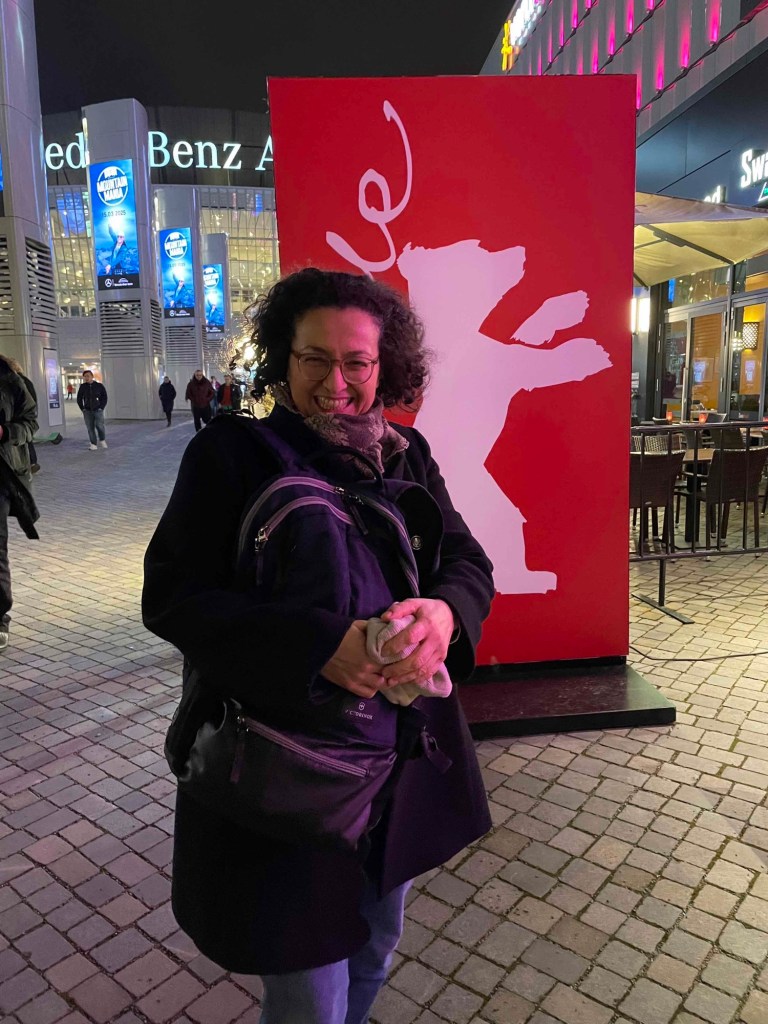
Freitag, 15.30 Uhr sollte es losgehen. Bis 14 Uhr in der Schule. Das sollte zu schaffen sein. Wenn die Bahnen und Busse fahren. Staatsbesuch aus der Ukraine bei Olaf. Alles steht rundum dem Kanzleramt. Bus fährt nur auf Umwegen zum Haus der Kulturen der Welt. Ich steige am Bundestag aus und laufe, wie viele andere auch. Das Schaulaufen auf dem roten Teppich habe ich verpasst. Doch das wird gar nicht mehr so wie früher zelebriert. Eher bescheiden drinnen vor einer großen Berlinale Wand.
Friday, 3.30 p.m. was the starting time. At school until 2 pm. That should be manageable. If the trains and buses are running. State visit from Ukraine to Olaf. Everything is blocked around the Chancellery. Bus only takes a diversion to the House of World Cultures. I get off at the Bundestag and walk, like many others. I missed the show on the red carpet. But it’s no longer celebrated the way it used to be. Rather modestly indoors in front of a large Berlinale wall.
Und schon saß ich drin, mitten im Getümmel zwischen vielen Kindern und vielen Erwachsenen, die was mit Film zu tun haben. Der Cast und die gesamte Crew ein paar Reihen vor mir. Das Licht geht aus, Spots an. Alle jubelten und klatschten. Endlich geht es los! Checker Toby betritt die Bühne und eröffnet mit der Jury der Generation und der Hauptdarstellerin die Berlinale Generation. Ein paar wichtige Reden mussten noch gehalten werden. Ganz kurz. Alle waren so aufgeregt, endlich den Film sehen zu dürfen. Allen voran die Schauspieler und Schauspielerinnen, die den Film heute so in Gänze als finales Resultat zum ersten Mal sahen.
And there I was, sitting in the middle of the hustle and bustle between lots of children and adults who have something to do with film. The cast and crew a few rows in front of me. The lights go out, spotlights on. Everyone cheered and clapped. Finally the film starts! Checker Toby enters the stage and opens the Berlinale Generation with the Generation jury and the leading actress. A few important speeches still had to be made. Very short. Everyone was so excited to finally be able to see the film. Especially the actors and actresses, who were seeing the film in its entirety for the first time today as the final result.
Worum geht‘s? Ein Film über Integration eines syrischen Mädchens, die mit Familie nach Berlin geflüchtet ist, im Wedding in einer (Vorsicht: Cliché) furchtbar heruntergekommenen Brennpunktschule landete, gemobbt wird, darum kämpft, in die Mädchenfußballmannschaft der Schule aufgenommen zu werden. Mit ihr als Goalie gewinnen sie wie durch ein Wunder als Underdogs die Berliner Meisterschaften. Neben dem Schulcliché gibt es natürlich noch weitere, die aber den Film auch so einzigartig machen. Man weiß manchmal nicht, ob man lachen darf oder weinen soll. Und beides zusammen ergibt eine so emotionale Mischung. Am Ende liefen mir nur die Tränen. Das Publikum fieberte die ganze Zeit mit, als ob sie alle im Film mitspielen. Und zu Recht erntete die Crew und die Schauspielerinnen, die Regisseurin Soleen Youssef viel Beifall. Die ganze Crew stand auf der Bühne für das sich anschließende Q&A. Ein Kinderfilm. Das heißt nur Kinder durften Fragen stellen. Ich drücke allen die Daumen, dass sie in ihrer Kategorie auf der Berlinale einen Preis abräumen. Sie haben es sich verdient.
What’s the film about? A film about the integration of a Syrian girl who fled to Berlin with her family, ended up in Wedding in a (cliché alert) terribly run-down hotspot school, is bullied and fights to be accepted into the school’s girls‘ football team. With her as goalie, they miraculously win the Berlin championships as underdogs. In addition to the school cliché, there are of course others that make the film so unique. Sometimes you don’t know whether to laugh or cry. And both together create such an emotional mixture. By the end, I was in tears. The audience was in raptures the whole time, as if they were all in the film. And the crew and the actresses, the director Soleen Youssef, rightly received a lot of applause. The whole crew stood on stage for the Q&A that followed. A children’s film. That means only children were allowed to ask questions. I’m keeping my fingers crossed that they all win an award in their category at the Berlinale. They deserve it.


Film Nr. 2 – Langue Etrangère – eine deutsch-französische Koproduktion über eine Austauschpartnerschaft. Zwei 17-jährige Mädchen, Lena aus Leipzig, Fanny aus Strasbourg. Es beginnt in Leipzig. Lena eher politisch engagiert, Klimaaktivistin. Fanny lebt in einer anderen Welt und verfängt sich darin. Ich schaue mir diesen Film mit einer Freundin an – Französin. Im Sinne der deutsch-französischen Freundschaft. Dieser Film gehört sogar zur Kategorie Wettbewerb, hätte aber auch zur Generation zählen können. Im Anschluss kein Q&A, dafür war es wahrscheinlich schon zu spät. Die Akteure werden wahrscheinlich alle im Club feiern.
Film no. 2 – Langue Etrangère – a German-French co-production about an exchange partnership. Two 17-year-old girls, Lena from Leipzig, Fanny from Strasbourg. It begins in Leipzig. Lena is politically engaged, a climate activist. Fanny lives in a different world and gets caught up in it. I’m watching this film with a friend – she’s French. In the spirit of Franco-German friendship. This film even belongs to the Competition category, but could also have been part of Generation. No Q&A afterwards, it was probably already too late for that. The actors will probably all be celebrating in the club.


Auch bei Film Nr. 3 kam niemand der Crew zur Vorstellung. Zu früh. 9.15 Uhr. Und gerade für diesen hätte man so viele Fragen stellen können. Architecton – ein italienisches Meisterwerk auch aus der Wettbewerb-Kategorie. Dieser Film hat mich völlig verwirrt. Ich hätte mir den bestimmt nicht im Kino oder Fernsehen angesehen. Und ich frage mich, nach welchen Kriterien die Preise in der Wettbewerbskategorie vergeben werden. Das muss für die Jury doch enorm schwer sein, zu sagen: Das ist der beste Film! Mit anderen Worten: Ich würde mich sehr wundern, wenn Architecton einen Preis bekommt. Aber verdient hätte er es schon. Ich bin im Zwiespalt.
Nobody from the crew came to the screening of film no. 3 either. Too early. 9.15 am. And there were so many questions that could have been asked about this film. Architecton – an Italian masterpiece, also from the competition category. I was completely confused by this film. I certainly wouldn’t have watched it in the cinema or on television. And I wonder what criteria are used to award the prizes in the competition category. It must be extremely difficult for the jury to say: This is the best film! In other words: I would be very surprised if Architecton won an award. But it would have deserved it. I’m in two minds.
Ich versuche mal kurz zu erklären, worum es geht. Wer dem nicht folgen kann, überspringt am besten diesen Absatz.
I’ll try to briefly explain what it’s all about. If you can’t follow it, it’s best to skip this paragraph.
Prologue: Eine Drohne filmt von oben eine zerstörte ukrainische Stadt – zerbombte Häuser, zerstörte Kirchen, Straßen. Kein Mensch weit und breit. Die Drohne fährt von oben nach unten eine offene Häuserfront ab. Man sieht die kurz zuvor verlassenen Wohnungen, verwüstet. Nächste Einstellung: Steine im Gebirge, die sich plötzlich bewegen, immer schneller werden – ein Erdrutsch? Steinschlag? Die Felsen zerbersten. Nächste Einstellung: eine alte Tempelanlage oder Festung – genau ist das nicht zu erkennen. Ein alter Mann steht vor einem großen Steinklotz und er untersucht die Mauer mit seinen Händen. Nächste Einstellung: in Schwarz-weiß wird ein vor vielen Jahren zerstörter verlassener Ort gezeigt. Bäume wachsen überall aus den Mauern, den Wegen. Nächster Schnitt: in einem Garten, Schneeregen, drei Männer (ein Architekt und zwei Bauarbeiter legen in einem Garten einen Steinkreis an. Es regnet und schneit unaufhörlich. Zwischendurch wechseln die Einstellungen zu den Steinen, zum Steinbruch, wo eine Explosion eine Steinlawine auslöst, alte Tempelanlagen in Rom oder Griechenland oder in der Türkei, zwischendurch der entstehende Steinkreis, dann eine komplett zerstörte Stadt. Kurzzeitig dachte ich: Gaza. Nein, kein Kriegsgeschehen. Erdbeben in der Türkei / Syrien vor einem Jahr. Eine Maschine, die hässlichen Stahlbeton herstellt. Und wieder zurück zu diesem Stein / Betonblock. Ein Arbeiter schiebt eine Schubkarre voller Steine den Berg hinauf. Was hat das alles miteinander zu tun? Bringt er den Steinkreisbauern die Steine? Nope. Man hört Presslufthammer-Geräusche und ist wieder in dieser Erdbeben zerstörten Stadt. Trucks reihen sich hintereinander ein und transportieren den Bauschutt nach und nach ab. Nächste Einstellung: eine riesige Kippe, wo der ganze Bauschutt ohne irgendwie von Holz und Plastik und anderen Müll getrennt wird, abgekippt wird. Kameraschwenk nach oben zum Steinbruch, wo neue Steine abgebaut werden, Steinmühle…. Epilogue: im Steinkreis. Endlich ein Dialog, endlich die Auflösung. Der Architekt beklagt sich über zu viel Beton. Wir Menschen benötigen mehr Beton als Wasser. Achso, ich dachte immer Plastik. Wir bauen nicht wie früher für tausende von Jahren, sondern nur für 40-50. Und selbst der Architekt hat gerade erst einen Wolkenkratzer für Mailand gebaut. Aus Beton und hässlich. Er sinniert über seinen Lebens- und Berufssinn. Und ich werde ganz nachdenklich und klatsche am Ende des Films.
Prologue: A drone films a destroyed Ukrainian city from above – bombed-out houses, destroyed churches, streets. Not a soul in sight. The drone travels from top to bottom along an open row of houses. You can see the recently abandoned flats, devastated. Next shot: Stones in the mountains, suddenly moving, getting faster and faster – a landslide? A rockfall? The rocks shatter. Next shot: an old temple complex or fortress – it’s impossible to tell exactly. An old man stands in front of a large block of stone and examines the wall with his hands. Next shot: a deserted place that was destroyed many years ago is shown in black and white. Trees grow out of the walls and paths everywhere. Next cut: in a garden, sleet, three men (an architect and two construction workers) are creating a stone circle in a garden. It rains and snows incessantly. In between, the shots change to the stones, to the quarry where an explosion triggers an avalanche of stones, ancient temples in Rome or Greece or Turkey, in between the stone circle being created, then a completely destroyed city. For a moment I thought: Gaza. No, not a war. Earthquake in Turkey / Syria a year ago. A machine that produces ugly reinforced concrete. And back to this stone / concrete block. A worker pushes a wheelbarrow full of stones up the mountain. What does all this have to do with each other? Is he bringing the stones to the stone circle builders? Nope, you hear the sound of jackhammers and you’re back in this earthquake-ravaged city. Trucks line up one behind the other and gradually remove the rubble. Next shot: a huge tip where all the rubble is being dumped without being separated from wood, plastic and other rubbish. Camera pans upwards to the quarry where new stones are being quarried, stone mill…. Epilogue: in the stone circle. Finally a dialogue, finally the resolution. The architect complains about too much concrete. We humans need more concrete than water. Oh, I always thought plastic. We don’t build for thousands of years like we used to, but only for 40-50. And even the architect has just built a skyscraper for Milan. Made of concrete and ugly. He reflects on his life and profession. And I get all thoughtful and clap at the end of the film.

Film No. 4 Disco Afrika – une histoire malgache. Eine madagassische Koproduktion mit Frankreich, Deutschland, Südafrika und Mauritius. Generation 14 +. Schulaufführung sozusagen. Mit sieben Schülern und Schülerinnen im Kino International. Ich habe den Film ausgesucht. Habe mich vom Thema leiten lassen, von der Zeit und vom Ort. Eine bewegende Geschichte über einen Madegassen, der auch nach dem Sinn des Lebens sucht. Vom Diamanten waschen zurück nach Hause. Er wird mit der revolutionären Geschichte seines Vaters konfrontiert und politisiert. Mich hat die eigentliche Geschichte des Hauptdarstellers viel mehr bewegt als der Film. Im Q und A im Anschluss erzählte er in seiner Muttersprache, wie er zu dieser Filmrolle kam. Das Publikum hat nichts verstanden, aber seine Emotionen beim Erzählen verrieten schon, dass das eine interessante Story ist. Als Rikshafahrer hörte er vom Cast, traute sich, sprach vor und verschwand. Er wurde ausgewählt, aber er war weg. Man hat ihn drei Monate lang gesucht: er hat kein Handy, keine social media, kein Radio, kein Fernsehen. Freunde hörten Radio und machten ihn darauf aufmerksam, dass er gesucht wird. Er hatte das Casting schon vergessen und dachte, die Polizei sei ihm auf den Fersen. Und sonst war er von allem so überwältigt. Das erste Mal in Europa, gleich auf einem Film Festival, bekam zum ersten Mal in seinem Leben einen Reisepass. So viele Menschen. Der Regisseur musste einige Mal aushelfen, weil ihm die Worte einfach fehlten. Schade, dass mein Kurs nicht zum Q&A geblieben ist. Sie haben definitiv etwas verpasst.
Film No. 4 Disco Afrika – une histoire malgache. A Malagasy co-production with France, Germany, South Africa and Mauritius. Generation 14 +. A school screening, so to speak. With seven pupils at the Kino International. I chose the film. I was guided by the theme, the time and the place. A moving story about a Madegasan who is also searching for the meaning of life. From washing diamonds back home. He is confronted with his father’s revolutionary history and politicised. I was much more moved by the actual story of the main character than by the film. In the Q and A afterwards, he explained in his native language how he came to play this role in the film. The audience didn’t understand anything, but his emotions during the narration revealed that it was an interesting story. As a rickshaw driver, he heard about the cast, dared to audition and disappeared. He was selected, but he was gone. They searched for him for three months: he has no mobile phone, no social media, no radio, no television. Friends heard the radio and told him that he was wanted. He had already forgotten about the casting and thought the police were on his tail. And he was so overwhelmed by everything else. The first time in Europe, right at a film festival, got a passport for the first time in his life. So many people. The director had to help out a few times because he simply didn’t have the words. Too bad my class didn’t stay for the Q&A. You definitely missed out on something.


Das war die Berlinale 2024 für mich. Ich bin schon gespannt, welche Filme das Rennen machen. Wahrscheinlich keiner von den vieren. Doch für mich hatten alle vier Filme einen besonderen Wert. Untereinander nicht zu vergleichen. Natürlich hätte ich gern auch einen Blockbuster gesehen. Doch dafür bleiben die regulären Kinoaufführungen. Auf der Berlinale sieht man eben Filme, die man nicht alle Tage sieht wie Architecton oder Disco Afrika.
That was the Berlinale 2024 for me. I’m already curious to see which films will win the race. Probably none of the four. But for me, all four films had a special value. They can’t be compared with each other. Of course, I would also have liked to have seen a blockbuster. But that’s what the regular cinema screenings are for. At the Berlinale you see films that you don’t see every day, like Architecton or Disco Afrika.
 Reisen und Socken - Socken und Reisen
Hinterlasse einen Kommentar