Langsam kommen wir in Bewegung. Trotz der permanenten Hitze. Auf dem Autodach könnte man ein Spiegelei braten. Deshalb zieht sich der Morgen: Aufstehen, ein bisschen Yoga auf der Terrasse, eine Runde im Pool und Frühstück, bevor wir schließlich losfahren.
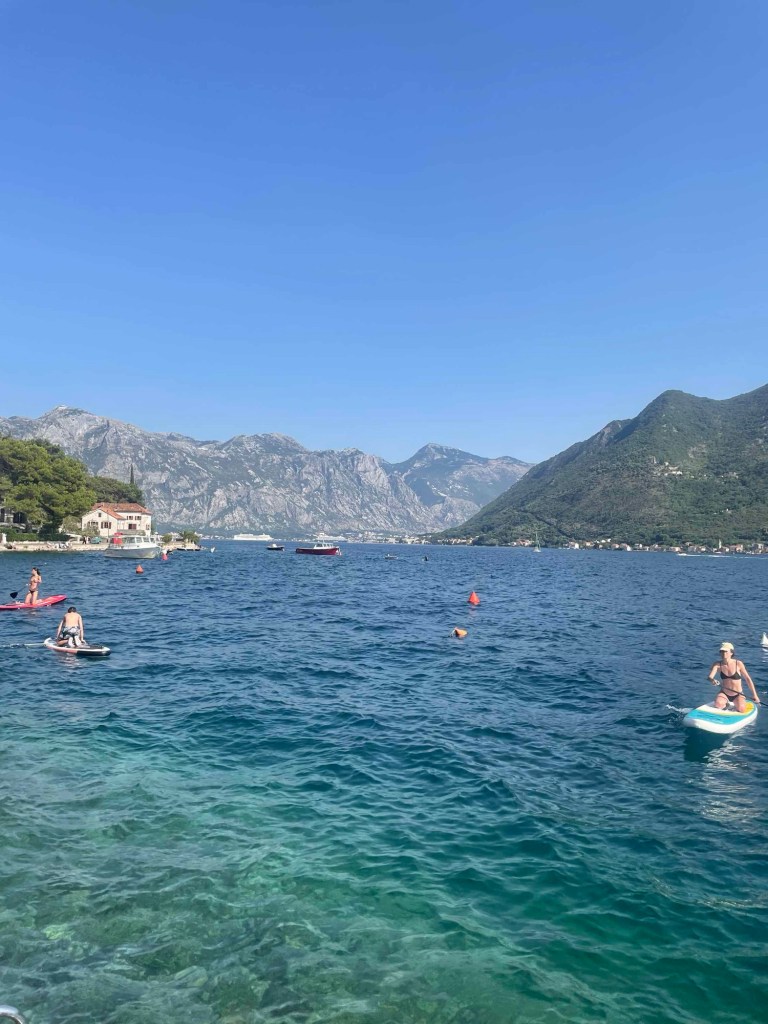
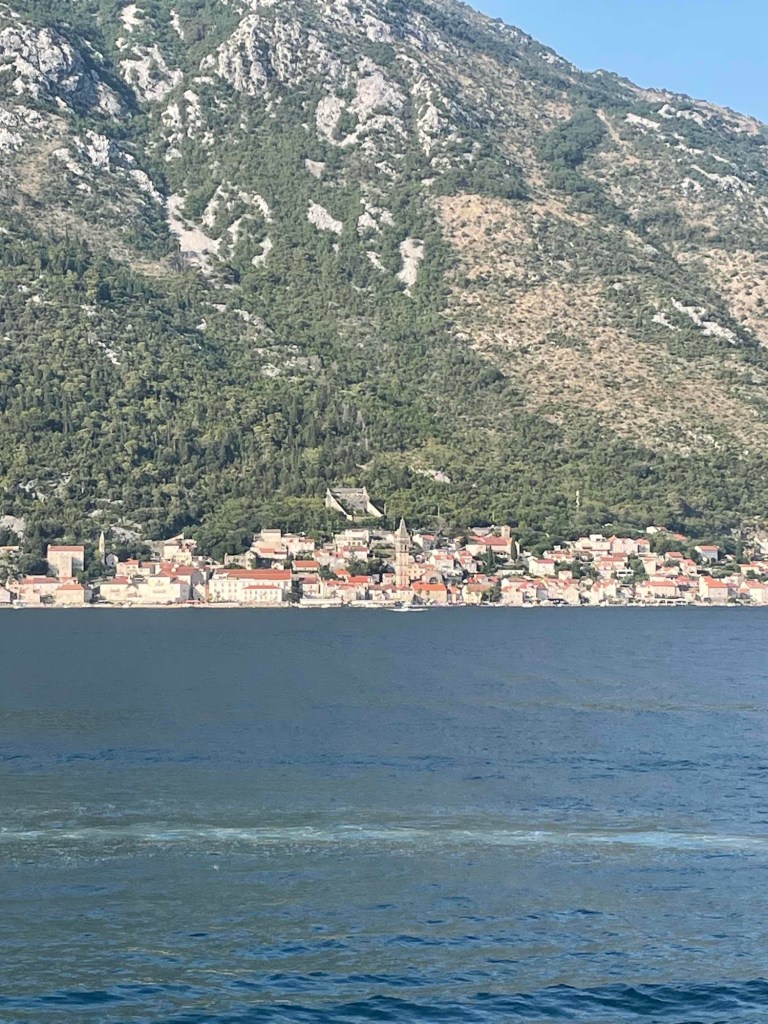
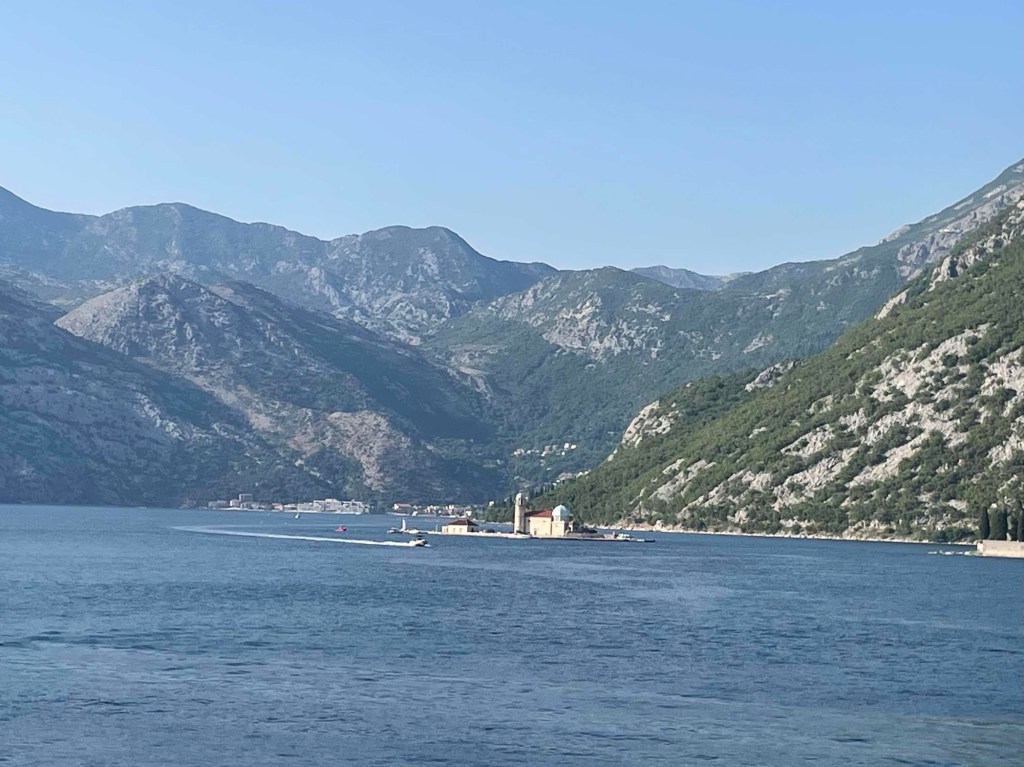
Wir machen eine Landpartie entlang der Küste rund um die Kotor-Bucht. Es ist immer noch Feiertag. Viele Einheimische und Urlauber sind unterwegs. Entsprechend kommen wir nur langsam voran. Kurz hinter Herceg Novi wird die Bucht schmaler. Das Wasser glasklar. Kleine Strände ziehen sich entlang der Straße Richtung Kotor. Hohe Berge umrahmen die Bucht – es erinnert ein bisschen an Norwegen: ein langer, schmaler Fjord.
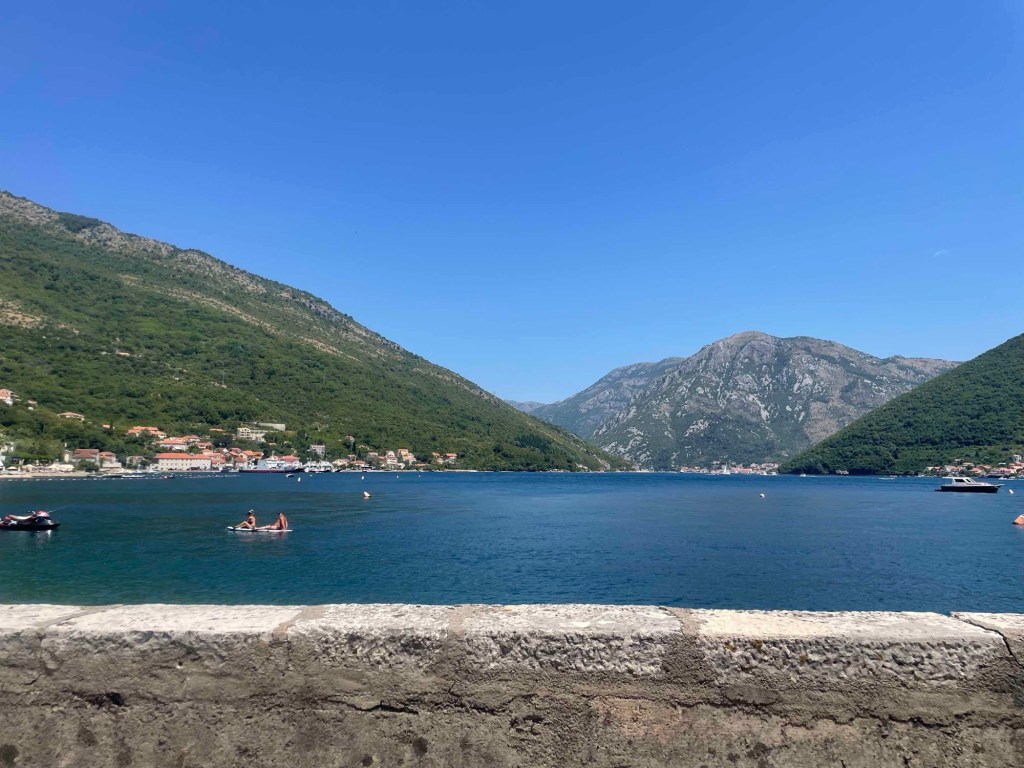
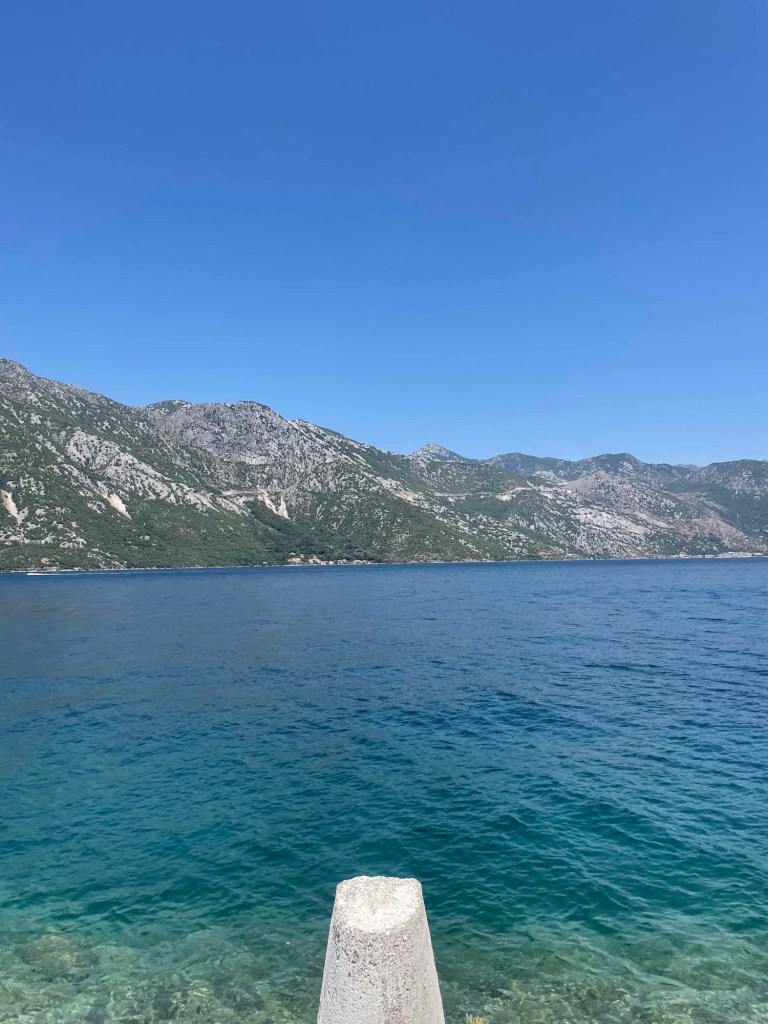
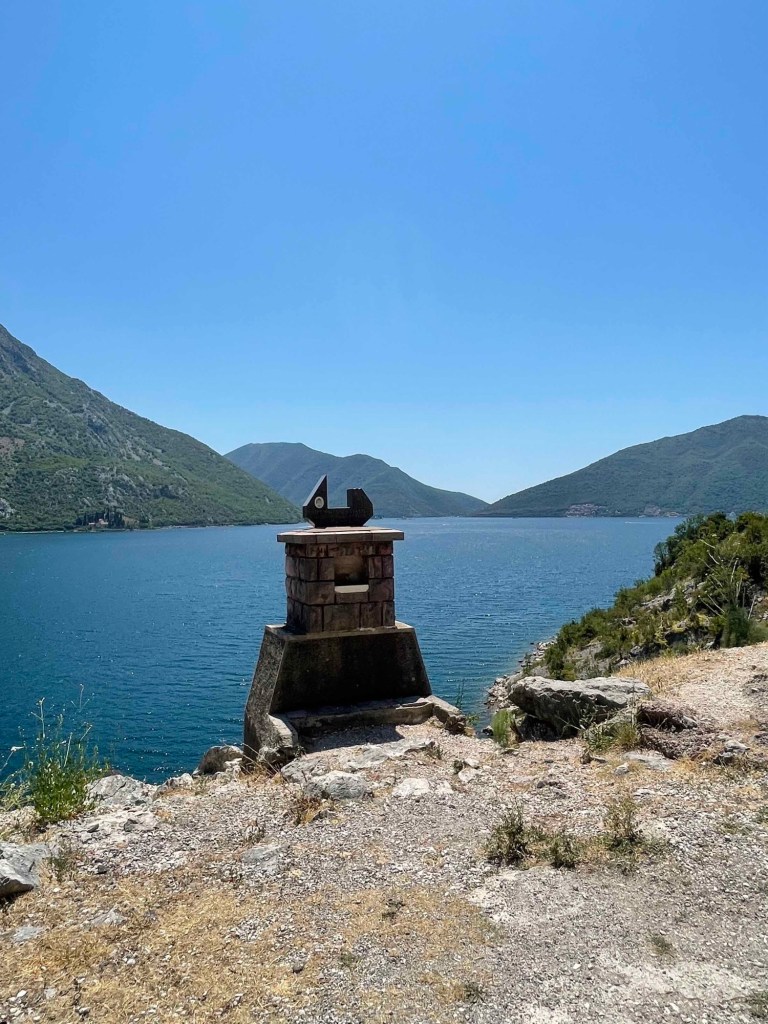
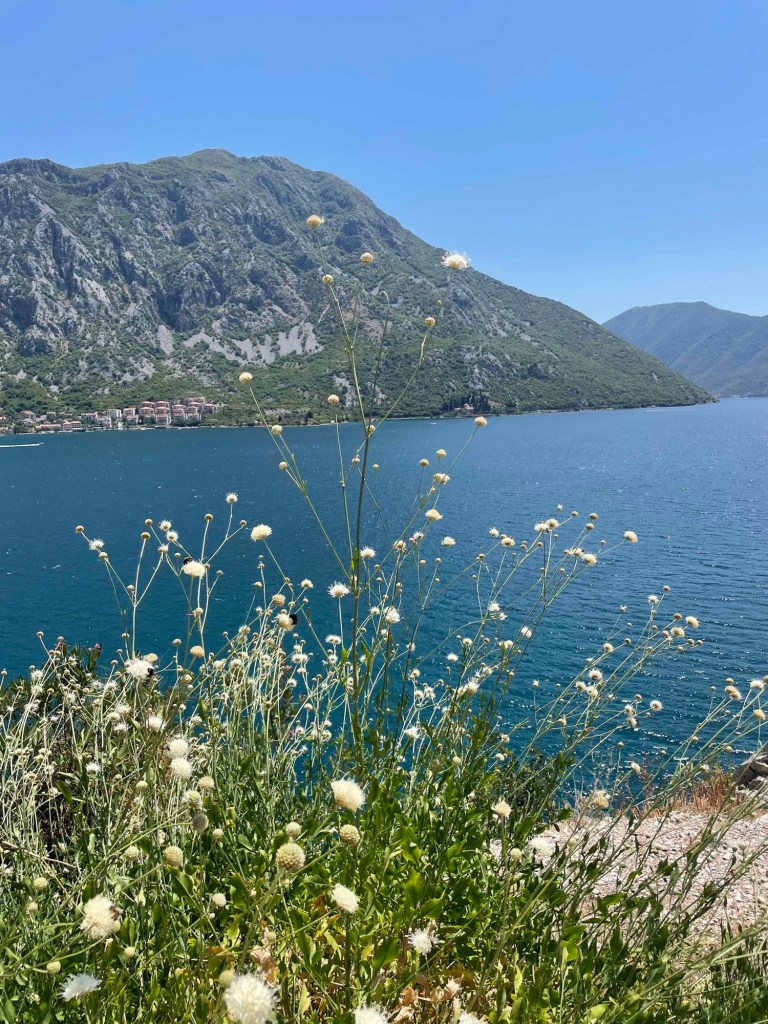
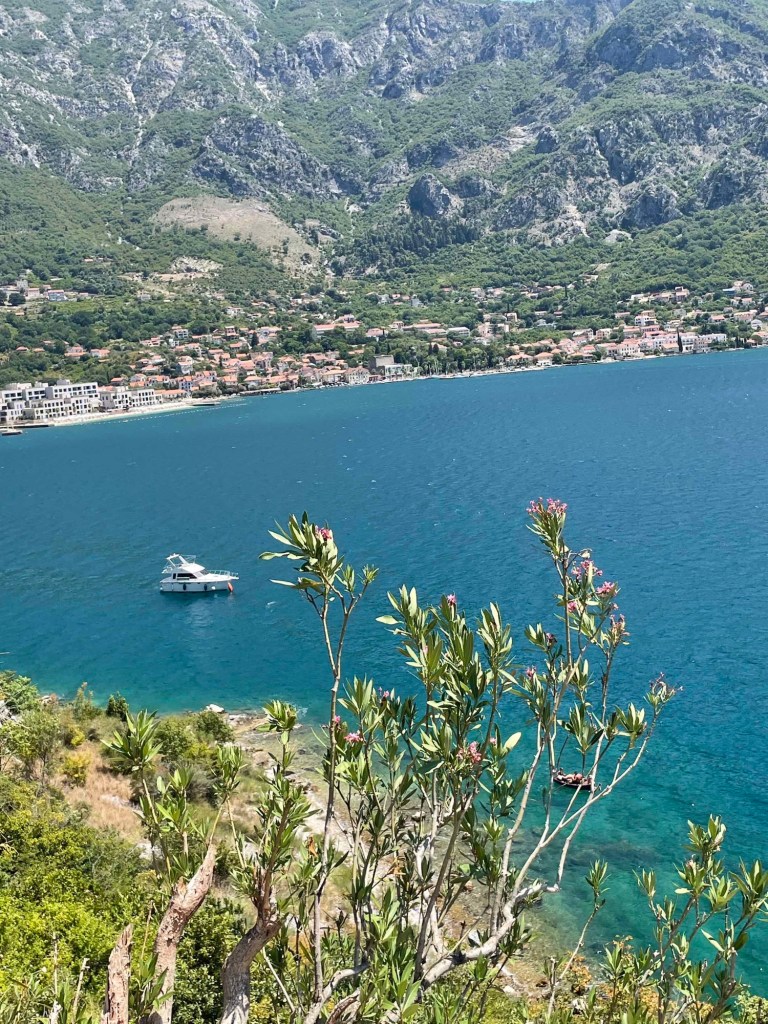
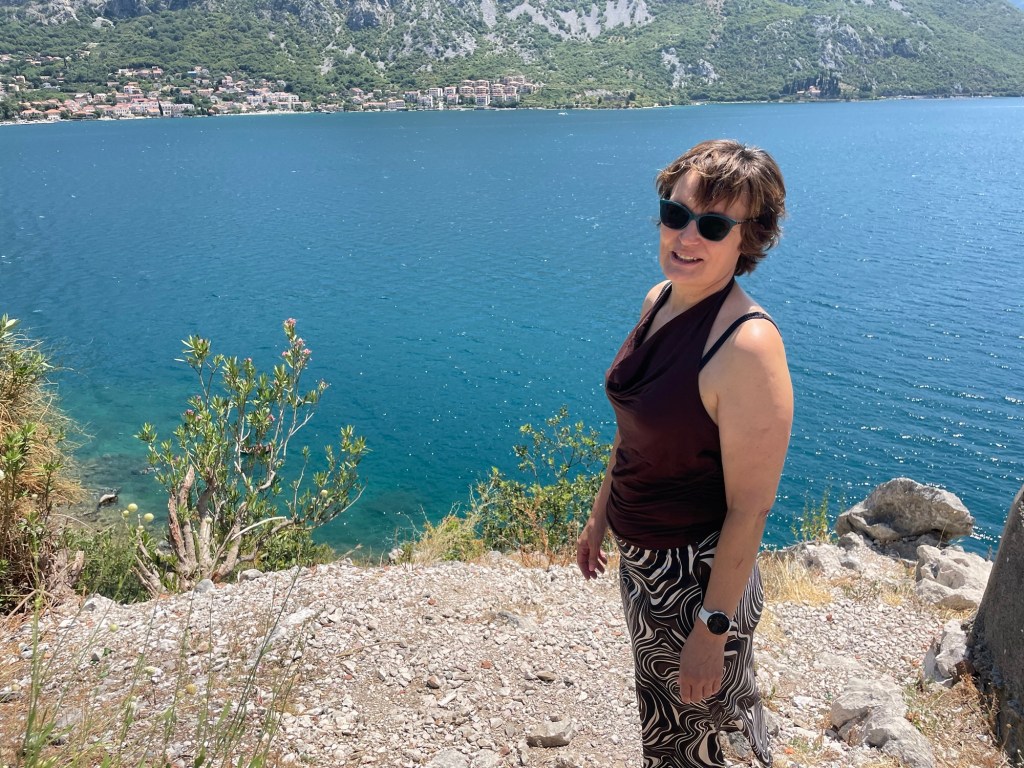
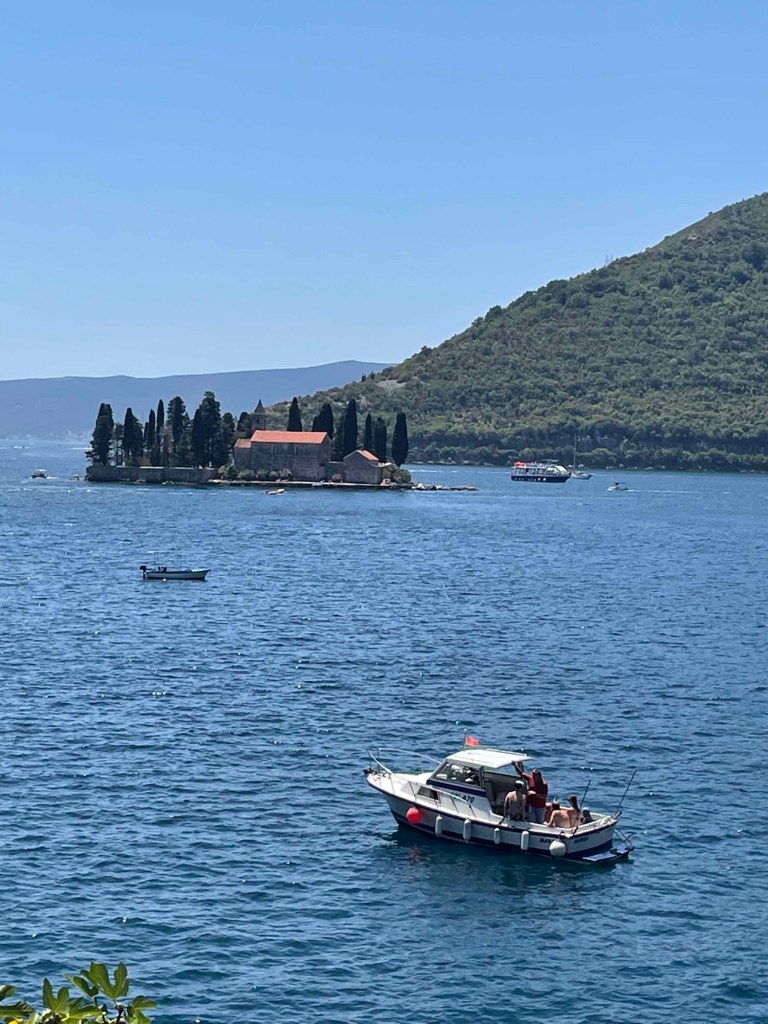
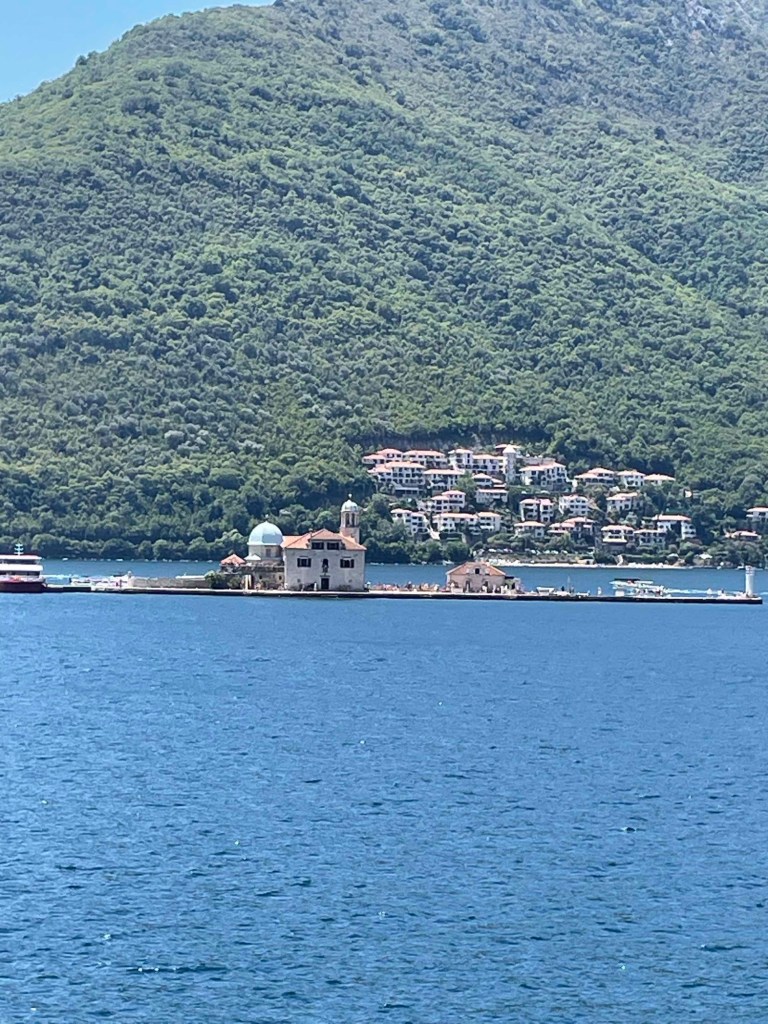
In Perast kommen wir zeitweise zum Stillstand. Die Verkehrsdichte nimmt zu. Alle wollen einen Parkplatz ergattern, um von dort mit dem Boot zur Insel Lady of the Rocks zu fahren. Die Parkplätze sind allerdings nur für Inselbesucher reserviert. Wir werfen einen Blick auf die beiden Inseln – eine mit Kapelle, die andere mit Kloster –, machen ein Foto und fahren weiter nach Dobrota, einem Ort kurz vor Kotor. Dort hatte ich mir einen Strand ausgesucht, um die schlimmste Hitze zu überbrücken, bevor wir uns die Orte ansehen.
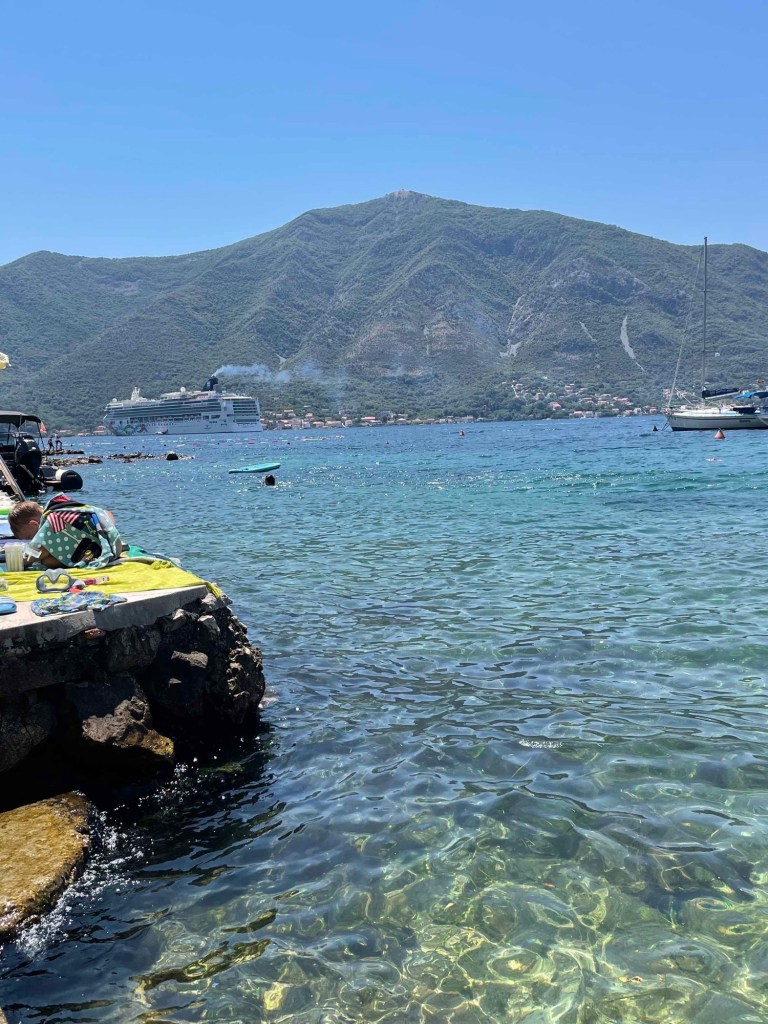
Doch was ist das? Riesige Rauchfahnen steigen in den Himmel und verpesten die Luft. Fünf (!!!) Kreuzfahrtschiffe liegen in der Bucht, verschandeln den schönen Ausblick und richten noch weit mehr Schaden an. Unglaublich! Aber nun ja: Montenegro lebt davon. Deshalb auch die Reisebusse und Menschenmassen in Perast.
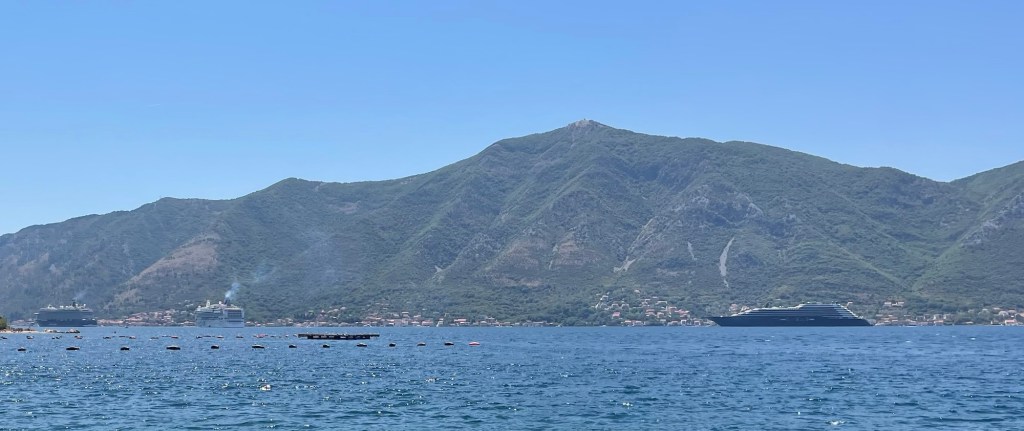
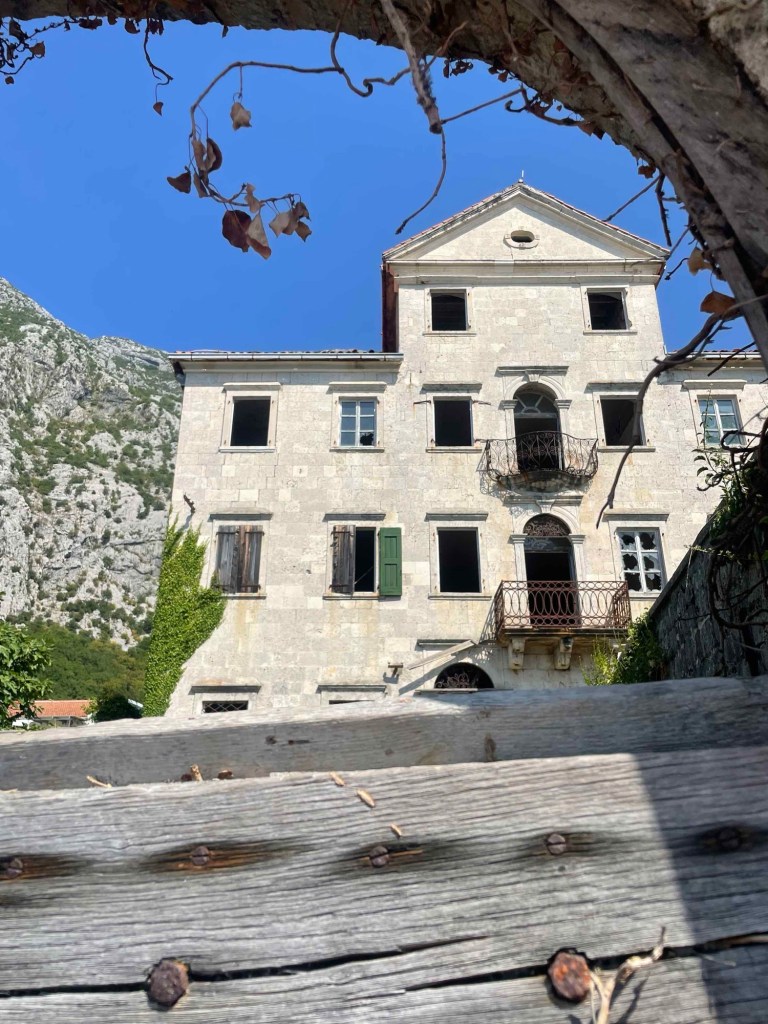
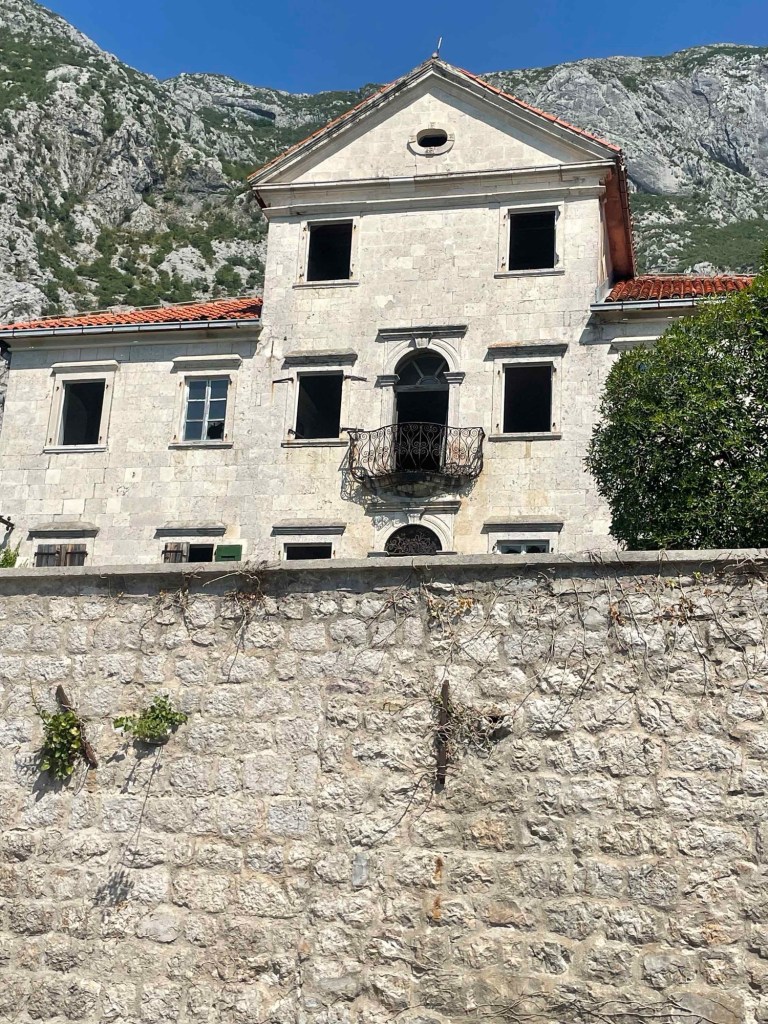
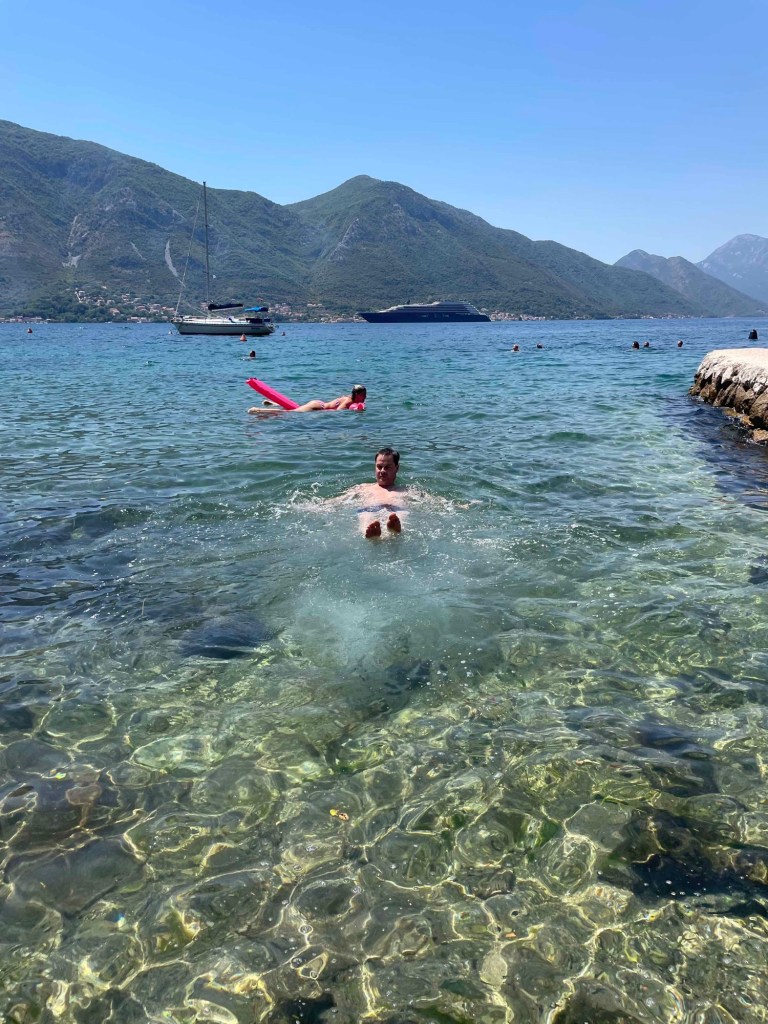
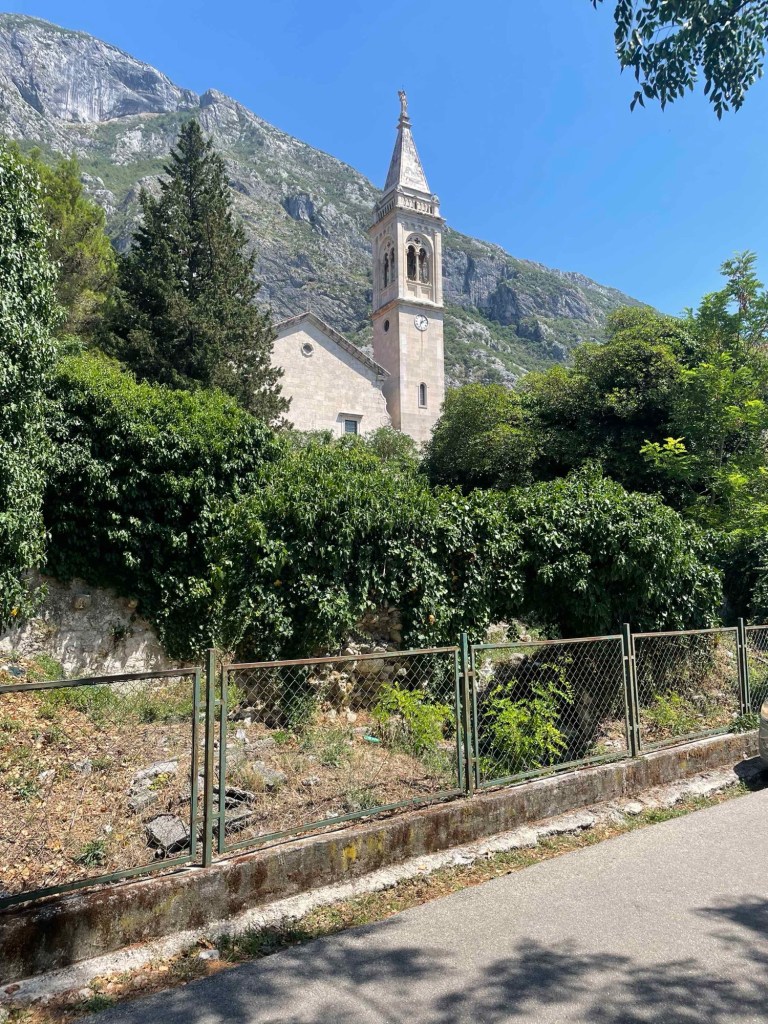
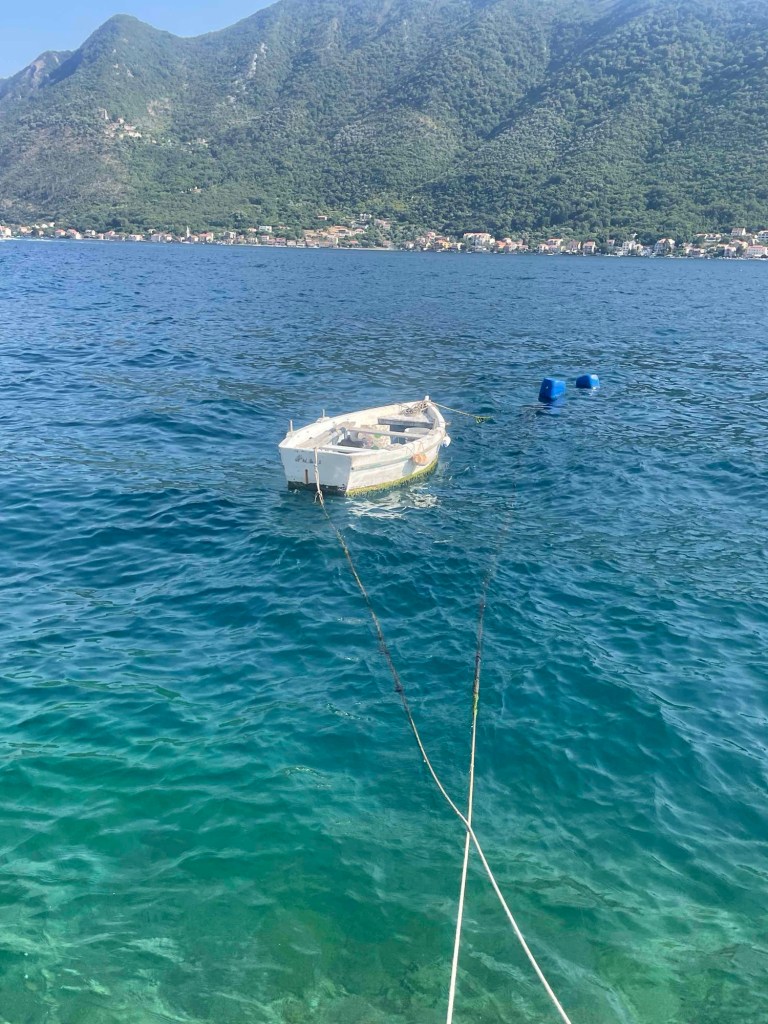
Wir finden unseren Strand in Dobrota und tauchen zum ersten Mal ins Meer ein – auch wenn der Blick auf zwei Kreuzfahrtschiffe vor uns alles andere als idyllisch ist. Schaut man dagegen zum Ufer, bietet sich eine ganz andere Aussicht: das Dorf mit seiner Kirche und der typischen Architektur des 18. Jahrhunderts. Mir fällt ein verlassenes Palais auf. Es verfällt zusehends, Schwalben fliegen ein und aus. Was ist denn da los? Ein Schild auf Serbisch – zum Teil leider verwittert – kann ich kaum entziffern. Aber ChatGPT kann alles und liefert uns diese Informationen:
Das barocke Palais, erbaut in der zweiten Hälfte des 18. Jahrhunderts, gehörte einer wohlhabenden Kaufmannsfamilie – einer der bedeutendsten Familien der Kotor-Bucht. Die Inschrift auf dem Schild ist eine Danksagung für die Gastfreundschaft gegenüber einem Durchreisenden.
Aber was ist passiert? 1979 wurde das Palais bei einem Erdbeben erheblich beschädigt und anschließend nie wieder richtig genutzt. Komplizierte Eigentumsverhältnisse und Vetternwirtschaft kommen noch obendrauf. 2014 versuchte man, daraus ein Hotel zu machen, doch die Auflagen des Denkmalschutzes waren zu streng. Ein Teufelskreis.
Nach unserer Siesta am Strand fuhren wir weiter nach Kotor. Gleich am Ortseingang wird darauf hingewiesen, dass auf sämtlichen Parkplätzen keine Plätze mehr frei sind. Die Bürgersteige sind voller Kreuzfahrttouristen. Auf dem Markt wird der schrecklichste Touristennepp verkauft. Es lohnt sich nicht einmal, aus dem Auto auszusteigen. Wir fahren nur einmal durch, haben schnell alles gesehen und versuchen unser Glück stattdessen noch einmal in Perast.
Überall das gleiche Spiel: Parkplätze nur für Inseltouristen oder ein Tagesticket für 15 Euro. Wir wollen lediglich eine Stunde bleiben. Also parken wir kurzerhand am Straßenrand – fünf Minuten zu Fuß bis zum Stadtkern.
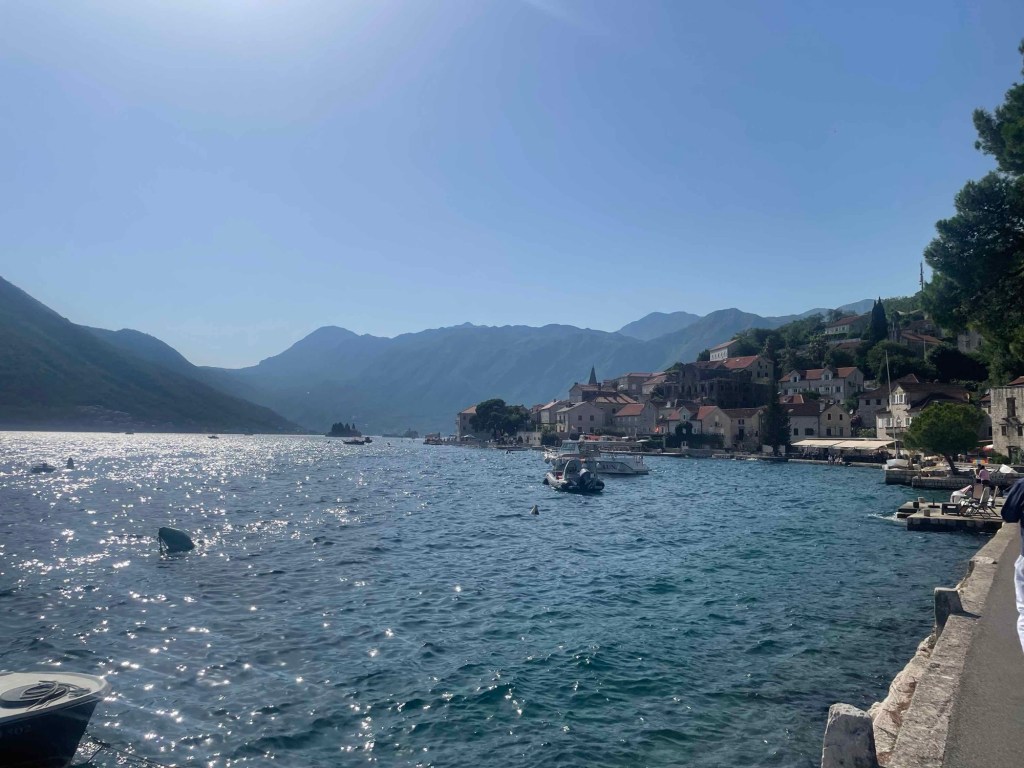
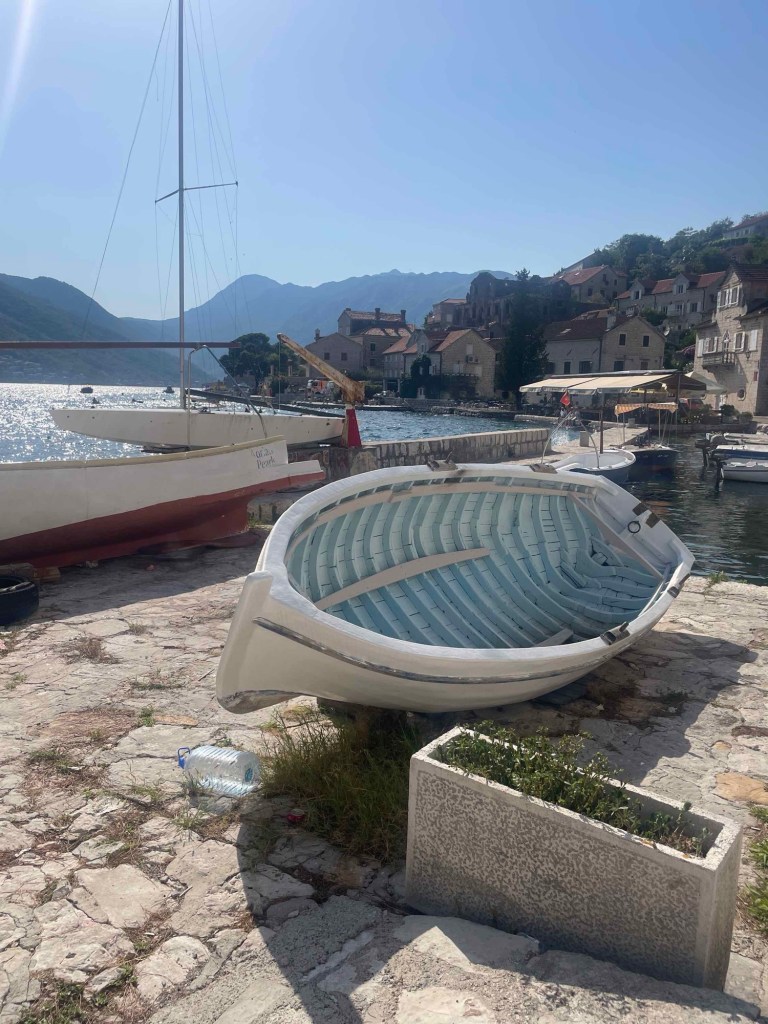
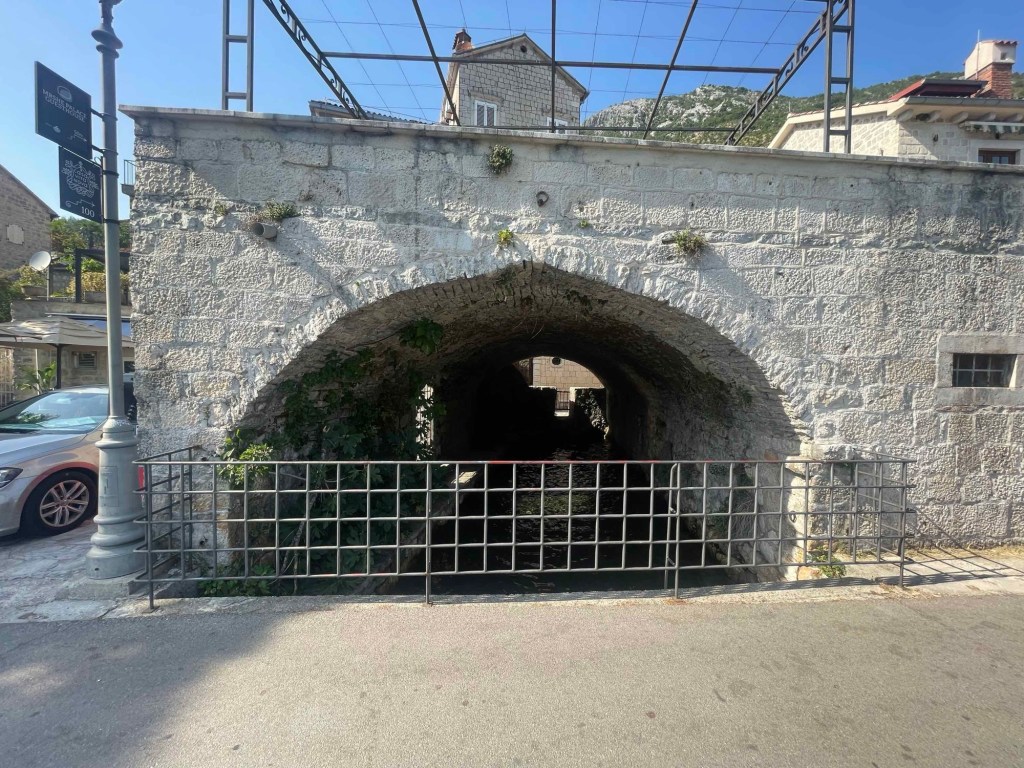
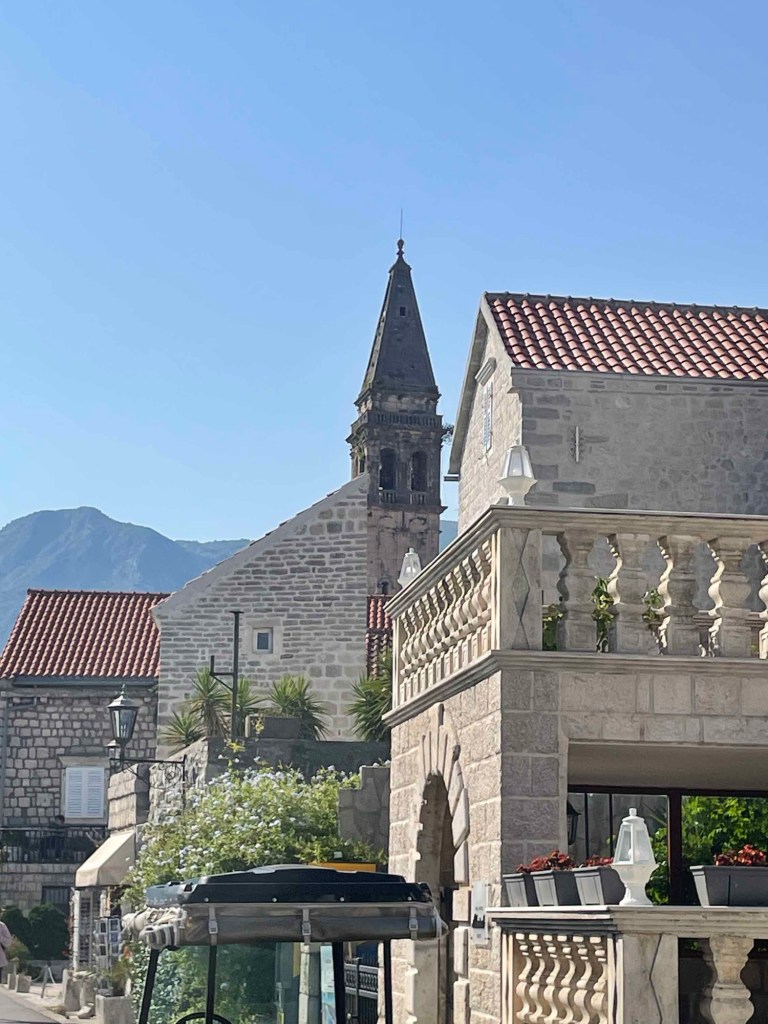
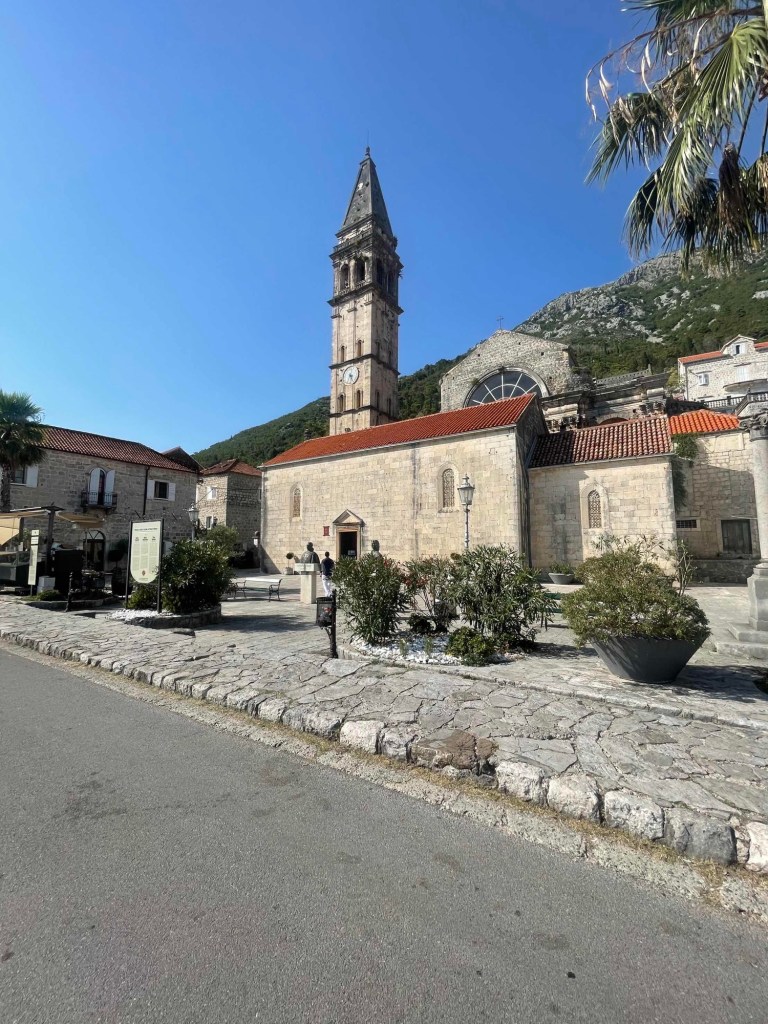
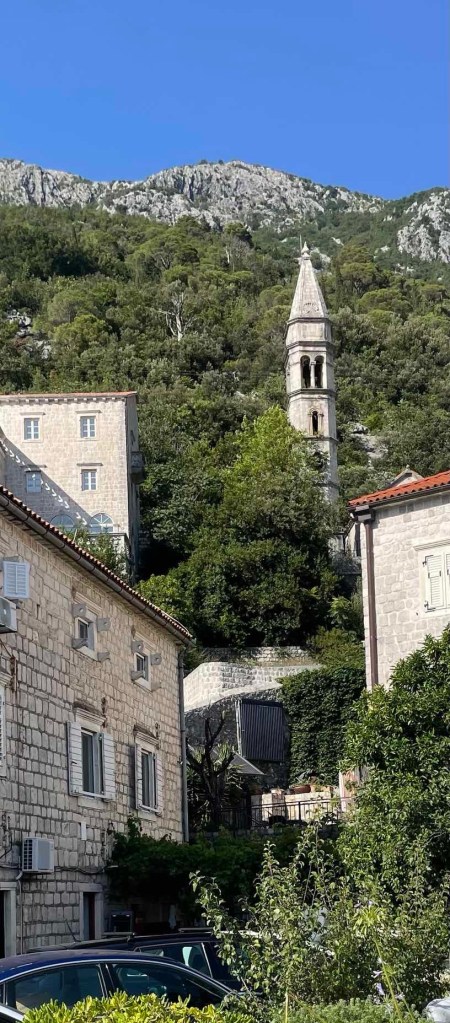
Perast wirkt im Vergleich zu Kotor deutlich mondäner. Lauter kleine Palais säumen die Strandpromenade, viele wurden zu Hotels umgebaut. Sehr sehenswert, auch wenn tagsüber vermutlich die Kreuzfahrttouristen den Ort belagern.
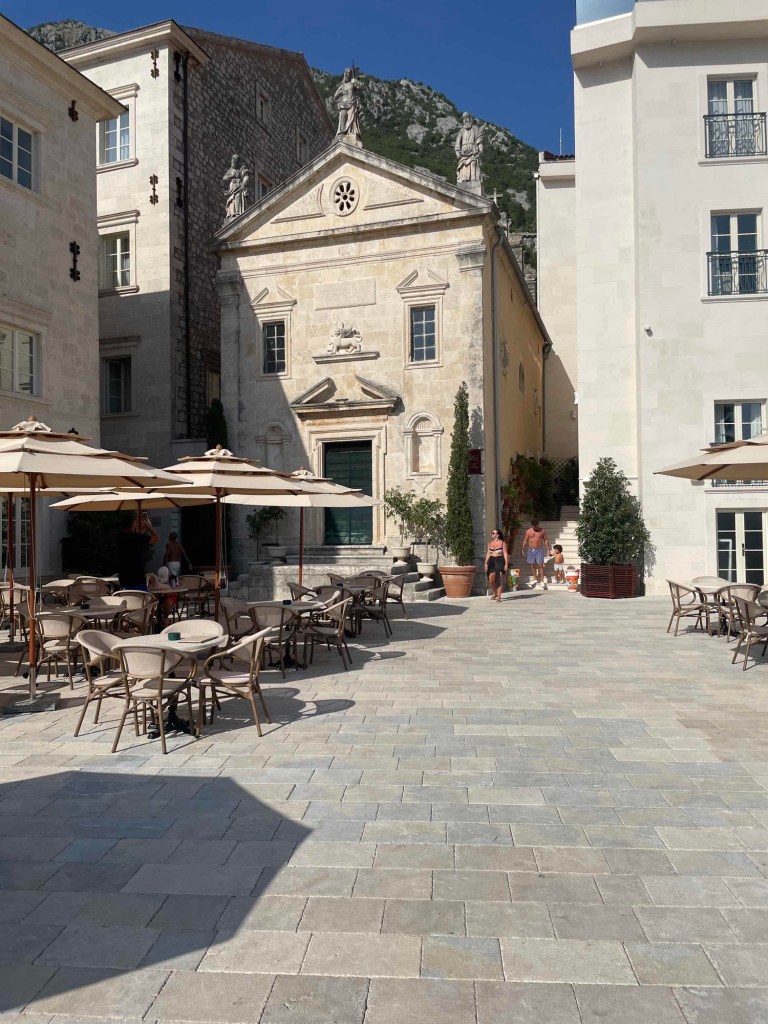
Wir suchen uns ein kleines Restaurant für ein Kaltgetränk und finden eine gemütliche Terrasse direkt am Wasser. Alle Tische in der ersten Reihe sind zwar frei, aber reserviert. Wir wollen doch nur schnell etwas trinken. Trotzdem werden wir abgewiesen. Vorne dürfen die sitzen, die etwas essen möchten, in der zweiten und dritten Reihe die Armen, die sich nur ein Getränk leisten können. Was ist das für ein Service? Zum dritten Mal werden wir enttäuscht. Trinkgeld gab es diesmal nicht. Und aufs Essen haben wir ebenfalls verzichtet, weil es bisher meist eher lieblos zusammengestellt war und geschmacklich nicht überzeugte. Kurz gesagt: keine Offenbarung der montenegrinischen Küche. Eher Touristenabzocke. Dann kochen wir eben selbst.
Auf der Rückfahrt wollten wir noch einmal an den kleinen Stränden entlang der Straße anhalten. Doch irgendwie ging alles viel zu schnell. Ich saß im Auto auf der falschen Seite und erkannte die Badestellen nicht wieder. Plötzlich waren wir schon zurück in Herceg Novi.
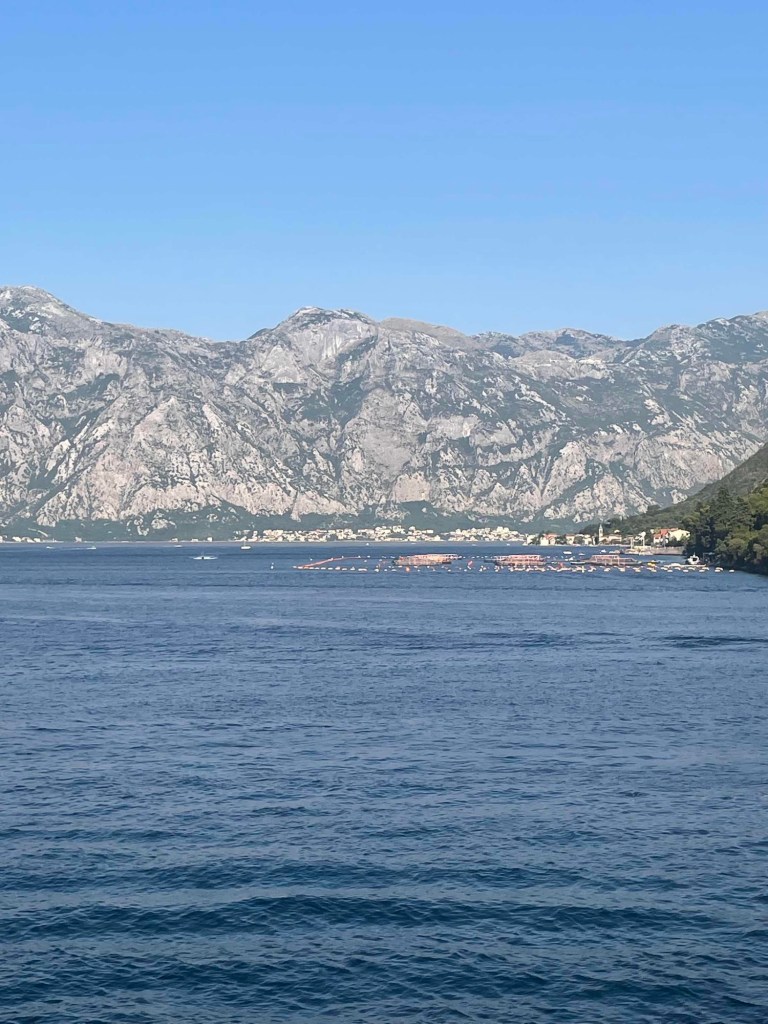
Also suchten wir auf unserer Seite der Bucht weiter und probierten verschiedene Zugänge zum Strand aus. Schließlich fanden wir an einem Hotel einen Parkplatz mit direktem Zugang zum Wasser. Eine kleine Abkühlung zum Abschluss eines langen, erlebnisreichen Urlaubstages an der Kotor-Bucht.
Postcard-Perfect Scenery with a Few Blemishes
Slowly, we get moving. Despite the relentless heat. You could fry an egg on the roof of the car. That’s why the morning stretches out: getting up, a little yoga on the terrace, a dip in the pool, breakfast, and only then do we finally set off.
We’re taking a scenic drive along the coast around the Bay of Kotor. It’s still a public holiday. Locals and tourists alike are out and about, so progress is slow. Just beyond Herceg Novi, the bay begins to narrow. The water is crystal clear. Small beaches line the road towards Kotor, while towering mountains surround the bay. It reminds me a little of Norway: a long, narrow fjord.
In Perast, traffic comes to a standstill. The roads are getting busier. Everyone is trying to find a parking space before taking a boat to Our Lady of the Rocks. The parking lots, however, are reserved exclusively for island visitors. We stop to admire the two islands—one with its chapel, the other with a monastery—take a photo, and continue on to Dobrota, just outside Kotor. I had picked out a beach there to escape the worst of the midday heat before exploring the towns.
But what’s that? Huge plumes of smoke rise into the sky, polluting the air. Five (!!!) cruise ships are anchored in the bay, spoiling the magnificent view and causing far more damage than just to the scenery. Unbelievable! But then again, Montenegro depends on tourism. That also explains the tour buses and the crowds in Perast.
We find our beach in Dobrota and take our first swim in the Adriatic, even if the view of two giant cruise ships in front of us is less than idyllic. Looking back towards the shore, however, reveals a completely different picture: the village, its church, and the characteristic 18th-century architecture. One abandoned palace catches my eye. It’s slowly falling into ruin, while swallows dart in and out through broken windows. What happened here?
A weathered sign in Serbian is difficult to decipher, but ChatGPT comes to the rescue:
The Baroque palace, built in the second half of the 18th century, once belonged to a wealthy merchant family—one of the most influential families in the Bay of Kotor. The inscription on the plaque is a note of gratitude for the hospitality shown to a passing traveler.
So what went wrong? In 1979, a devastating earthquake severely damaged the palace, and it has never been properly restored. Complicated ownership disputes and political favoritism have only made matters worse. In 2014, there were plans to convert it into a hotel, but strict heritage preservation regulations prevented the project from moving forward. A vicious circle.
After our beach siesta, we head into Kotor. At the entrance to town, electronic signs inform us that every parking lot is full. The sidewalks are packed with cruise ship passengers. The market is overflowing with the worst kind of tourist junk. It’s hardly worth getting out of the car. We simply drive through, feel we’ve seen enough, and decide to give Perast another try.
The same story everywhere: parking reserved for island visitors or a day ticket for €15. We only want to stay for an hour. So we park unofficially along the roadside and walk the five minutes into the old town.
Compared to Kotor, Perast feels much more elegant. Small palaces line the waterfront promenade, many of them beautifully converted into boutique hotels. It’s well worth seeing, although during the day the cruise ship crowds probably take over the place.
We look for a small restaurant to enjoy a cold drink and find a lovely terrace right by the water. All the front-row tables are empty—but reserved. We only want something to drink. Still, we’re turned away. The best seats are reserved for diners, while those ordering only drinks are expected to sit in the second or third row. What kind of service is that?
For the third time, we’re disappointed. No tip this time. And we skip dinner altogether because, so far, the food has mostly been rather uninspired and disappointing. In short: no revelation of Montenegrin cuisine. More like a tourist trap. So we’ll cook for ourselves instead.
On the drive back, we want to stop once more at one of the little beaches along the road. But somehow everything happens too quickly. I’m sitting on the wrong side of the car and don’t recognize the swimming spots anymore. Before we know it, we’re back in Herceg Novi.
So we continue searching on our side of the bay and try several paths leading to the water. Eventually, we find a hotel with parking and direct access to the sea. A refreshing swim is the perfect ending to a long, eventful day exploring the Bay of Kotor.
 Reisen und Socken - Socken und Reisen
Hinterlasse einen Kommentar