Hitze. Schon früh am Morgen. Am besten steht man schon 5 Uhr auf, vor dem Sonnenaufgang und genießt diesen. Doch danach knallt die Sonne unerbittlich auf die Terrasse. Frühstück ist dann erst ab 10 möglich, wenn die Hälfte des feststehenden eisernen Terrassentisches im Schatten steht.
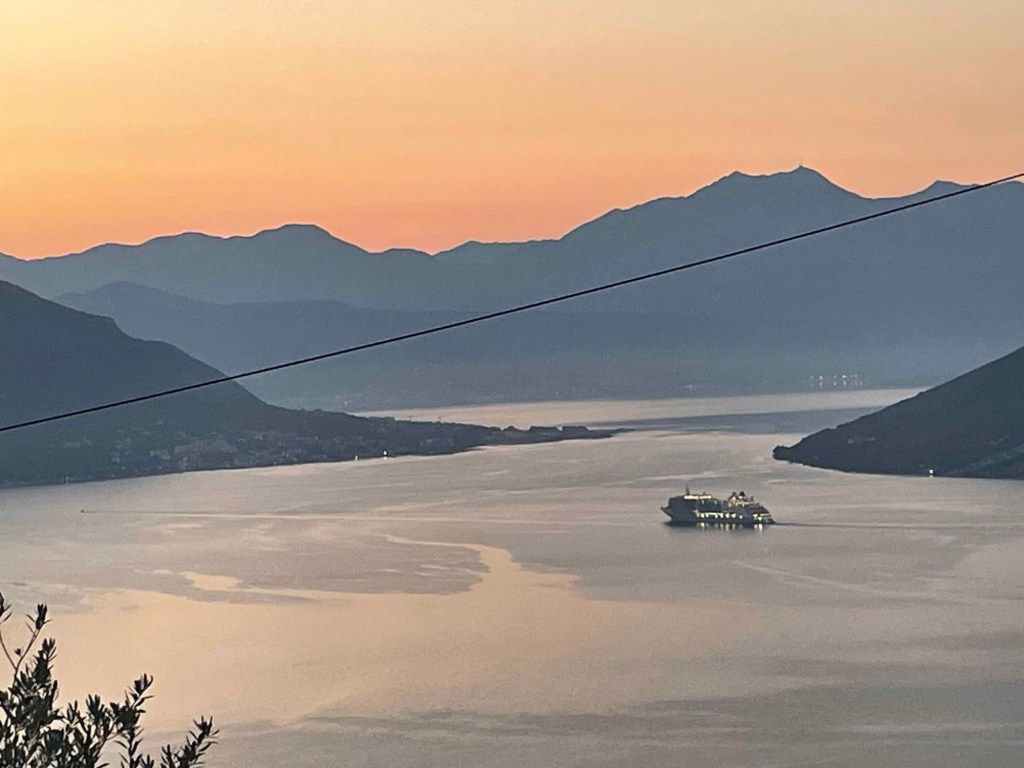

Am Donnerstag stand die Bucht vom Wasser aus auf unserer Liste. Wir organisieren eine Bootstour mit Abfahrt von Igalo zur Insel Marmula, zur Blue Cave und dem U-boot-Tunnel auf der Halbinsel Lustića. Um 12.30 Uhr in der größten Mittagsglut geht es los.
Wir erfuhren kurz vorher, dass die montenegrische Regierung die Blaue Grotte geschlossen hat. Man kann nicht mehr mit den Booten reinfahren und auch reinschwimmen geht nicht mehr, weil sich einige Boote nicht daran hielten und eine Schwimmerin vor kurzem schwer verletzt wurde. Ja, verständlich. Bei 5 Kreuzfahrtschiffen am Tag, wovon etliche Touristen den Landgang für diesen Ausflug nutzen, wird die Grotte nicht besser. Stattdessen gibt es noch eine Ersatzgrotte gleich nebenan. Aber der Reihe nach.
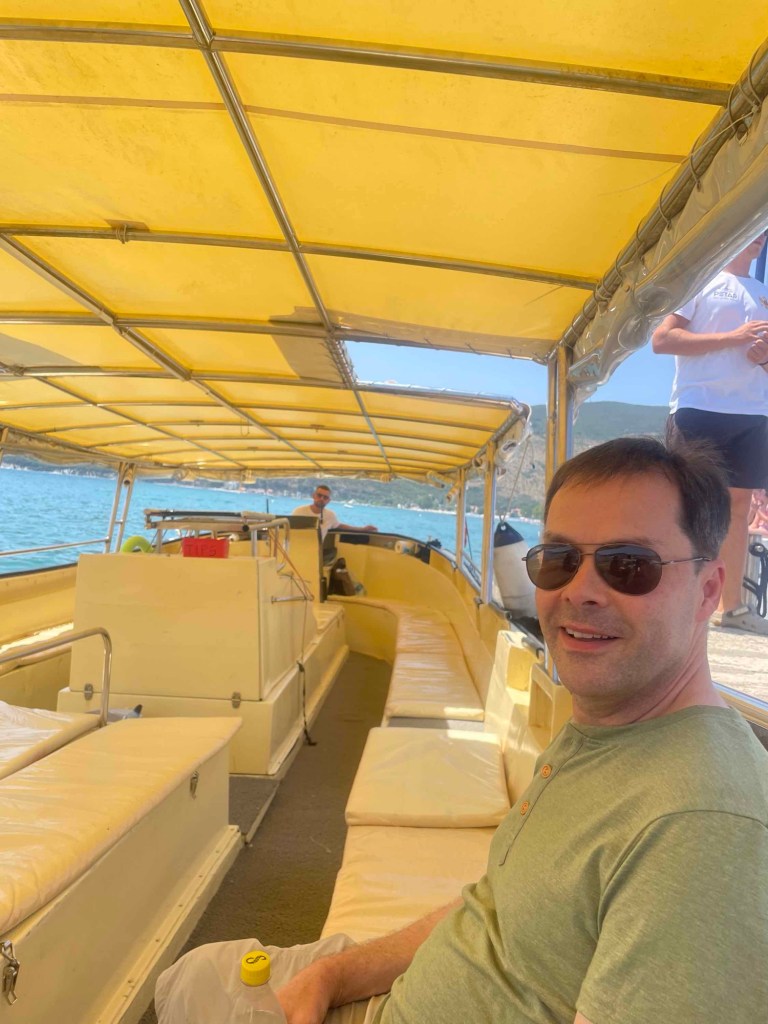
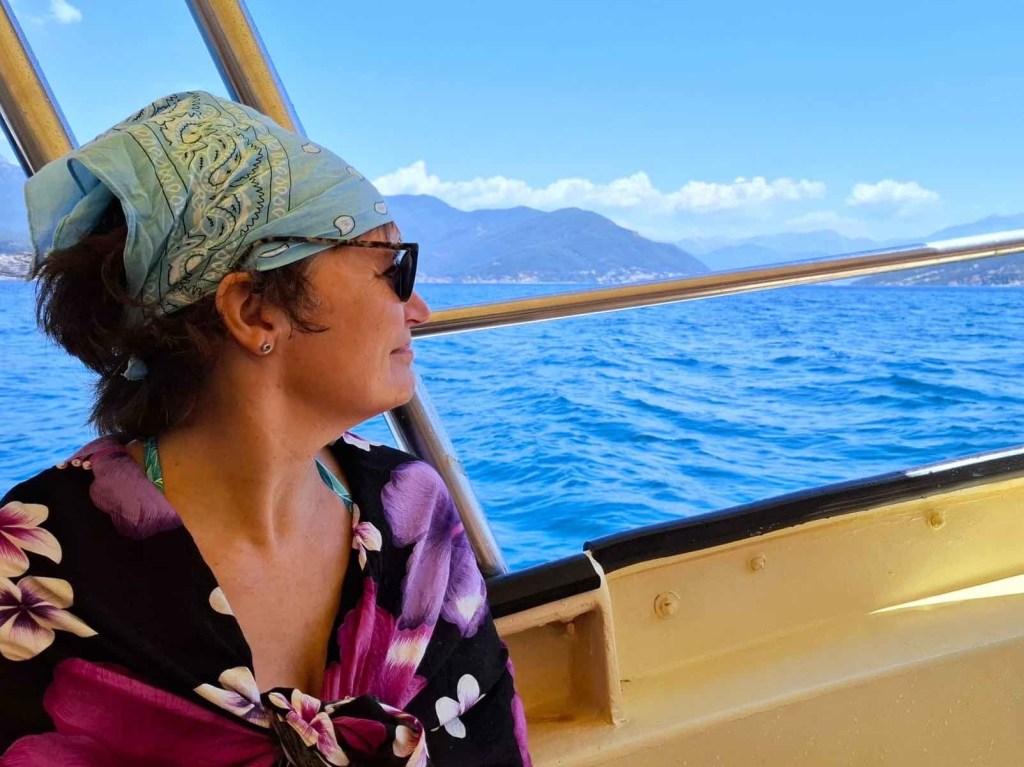
Die Abholung vom Bambulo-Club-Strandbar war pünktlich. Wir waren die ersten im Boot, welches noch an anderen Stationen (Haupthafen Herzeg Novi u.a.) Menschen einlud. Der Kahn war fast voll. Ich hatte schon eine Ahnung, was dann an der Grotte los sein würde. Wir sind nicht das einzige Boot, welches genau in diese Richtung fuhr.
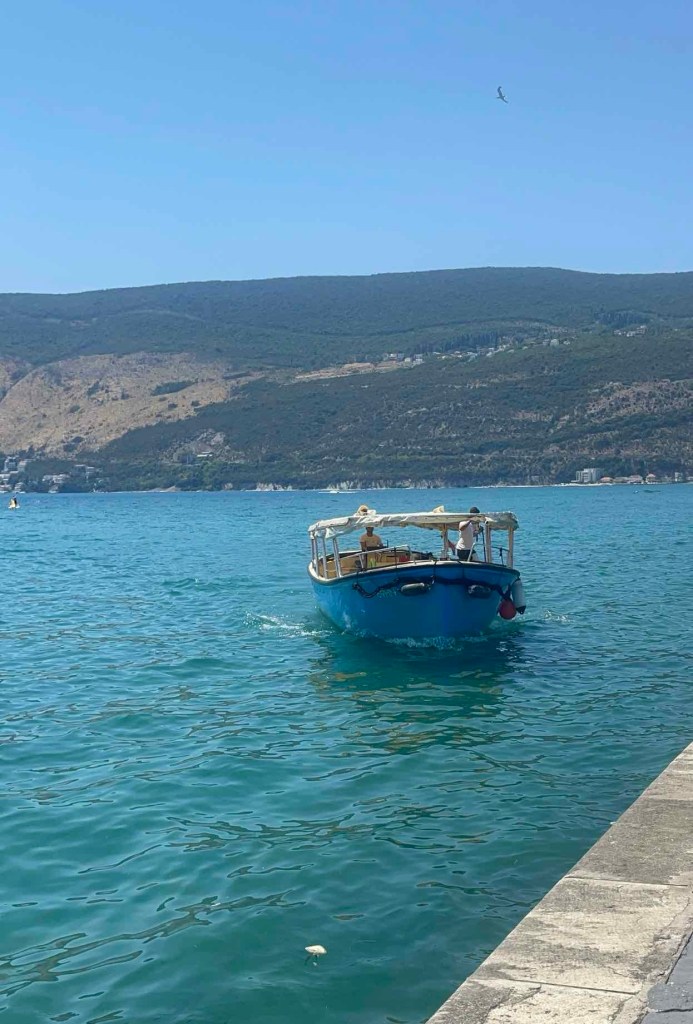
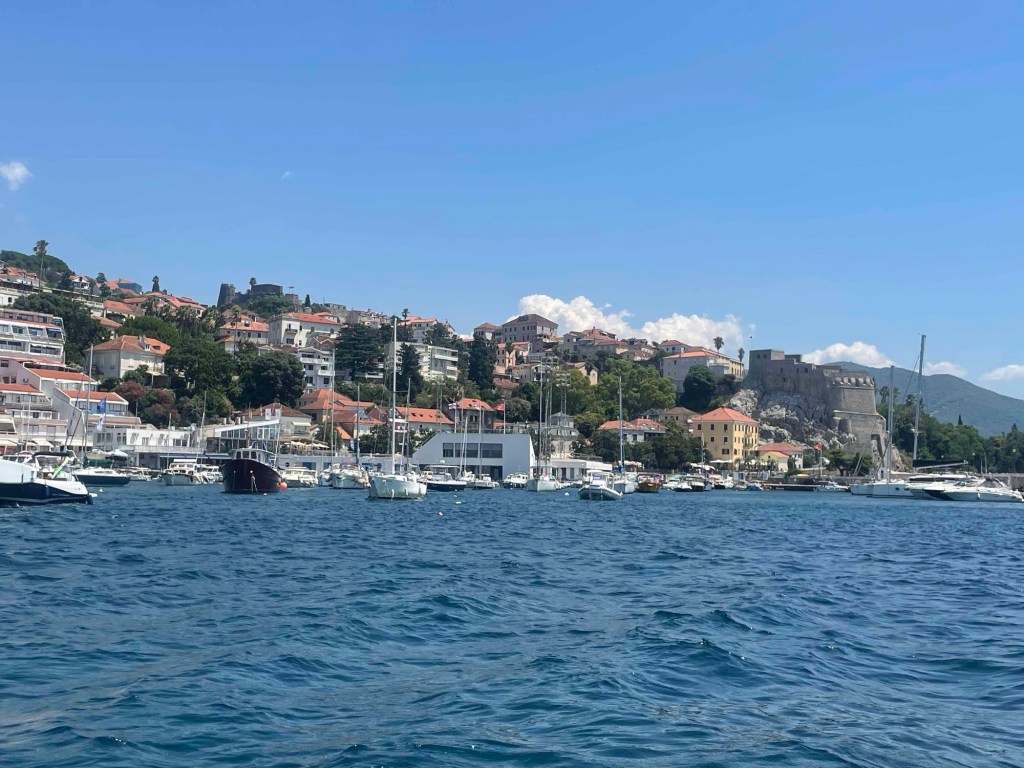
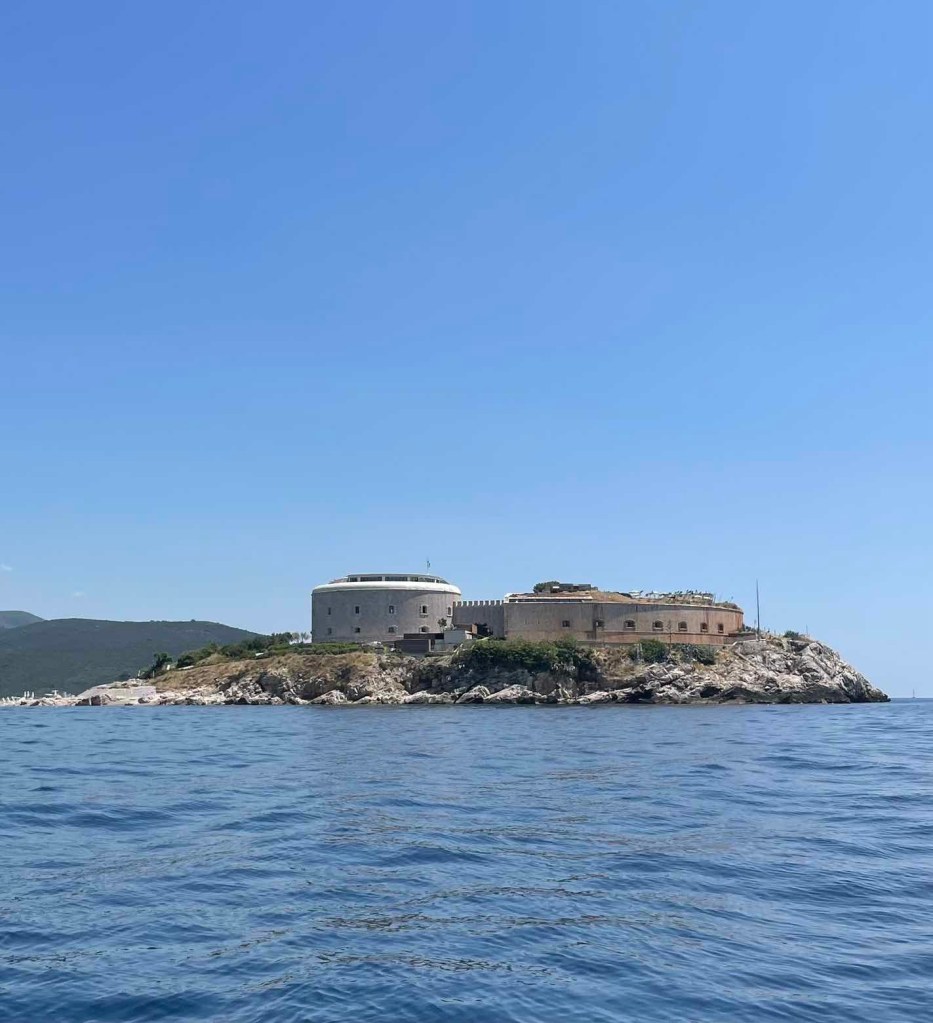
Doch zuerst umkreisten wir Marmula Island, als Festung 1853 von Österreich-Ungarn erbaut. Während des 2. Weltkrieges nutzten die Italiener diese Insel als Internierungs- und Gefangenenlager, in dem tausende Menschen festgehalten wurden und an Hunger und unter Folter litten, starben. Und dennoch ist es heute ein Luxushotel. Zugang bekommen also nur Hotelgäste, die 1000€ am Tag locker machen können.
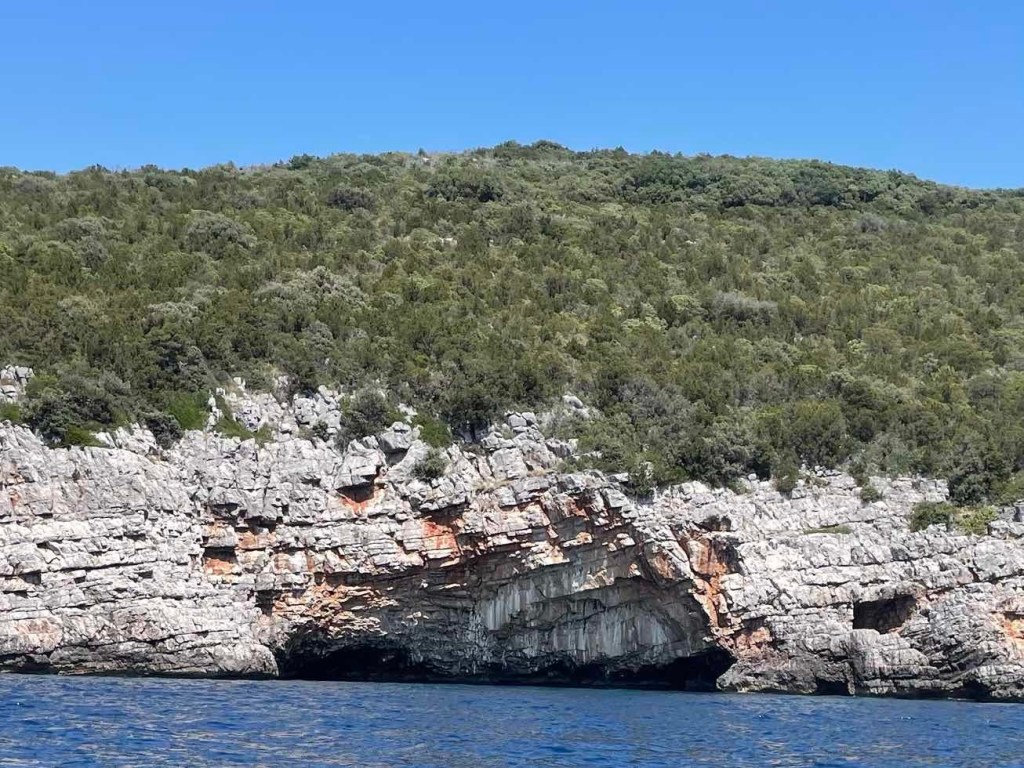
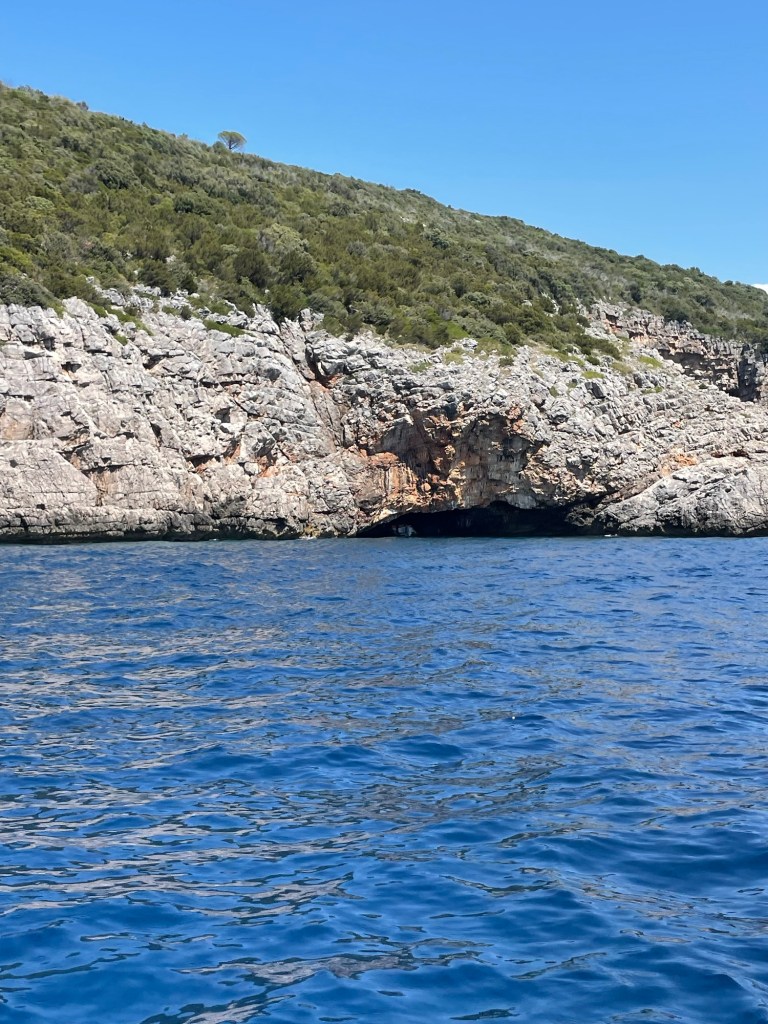
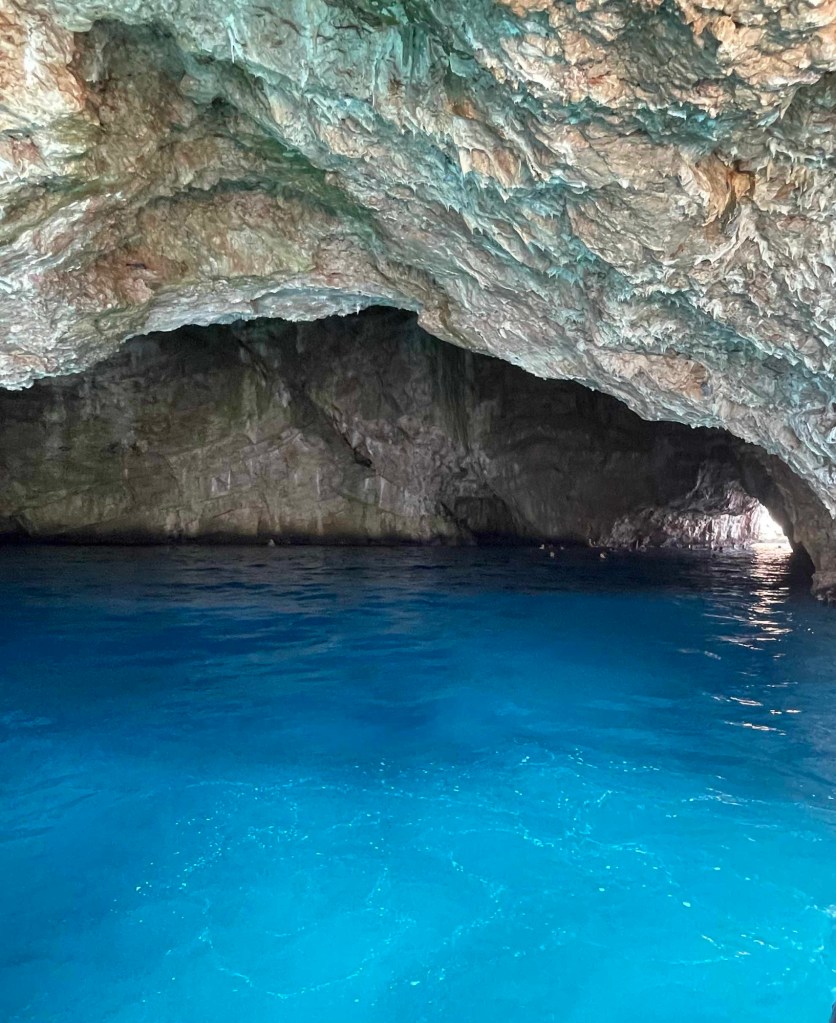
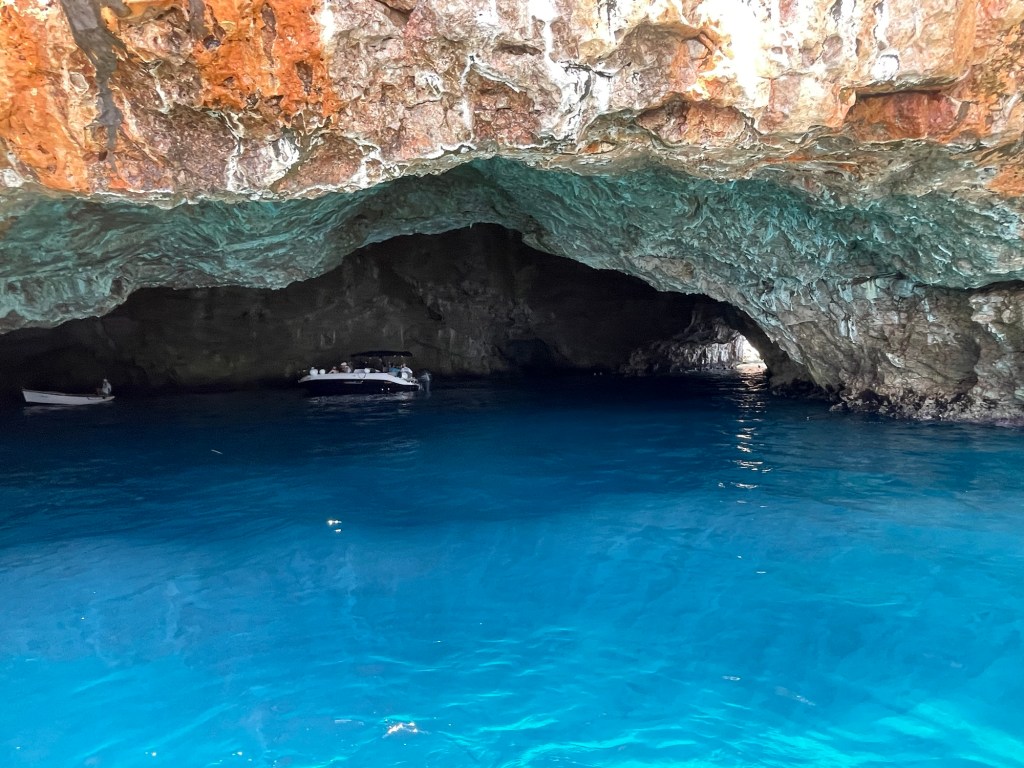
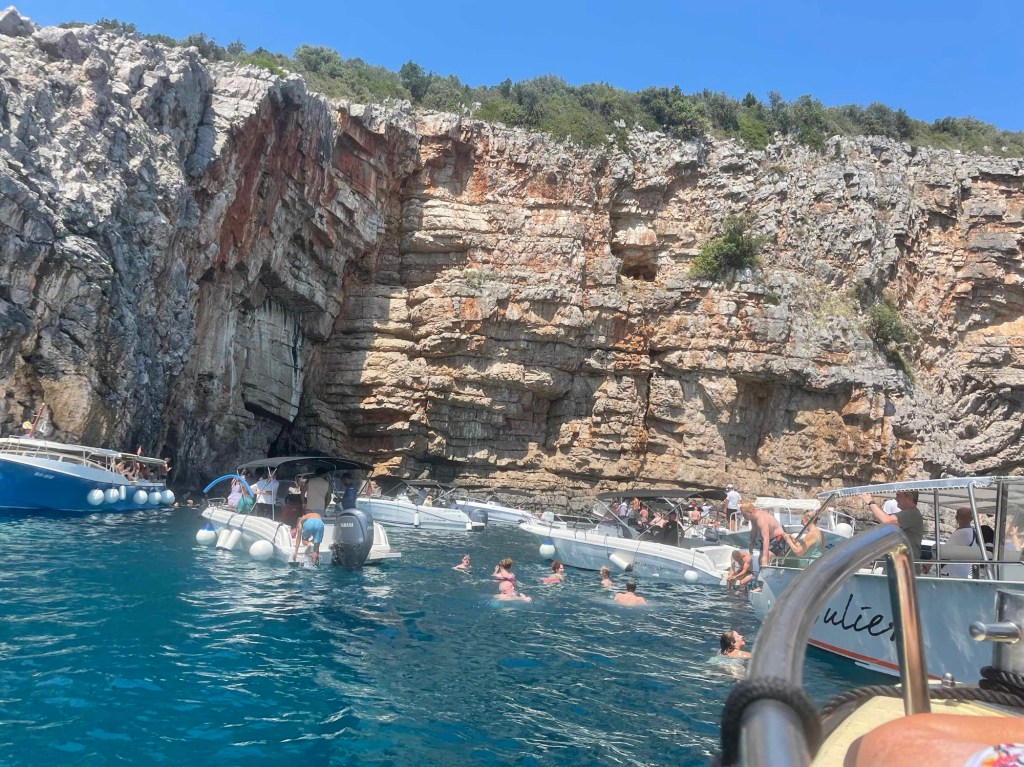
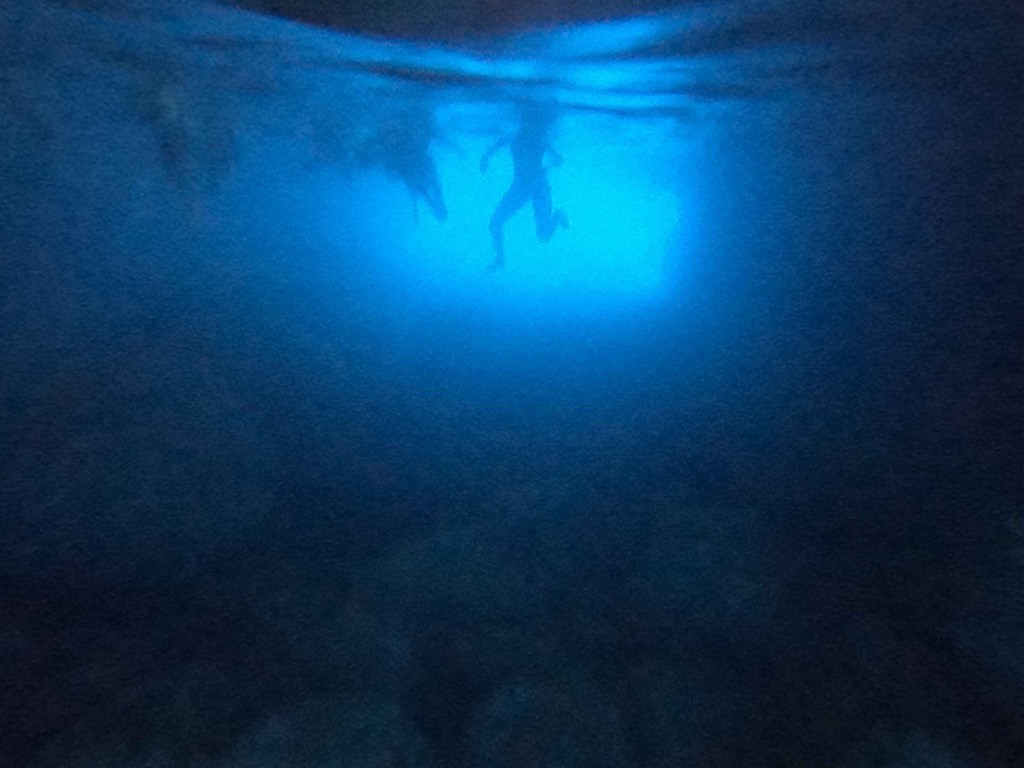
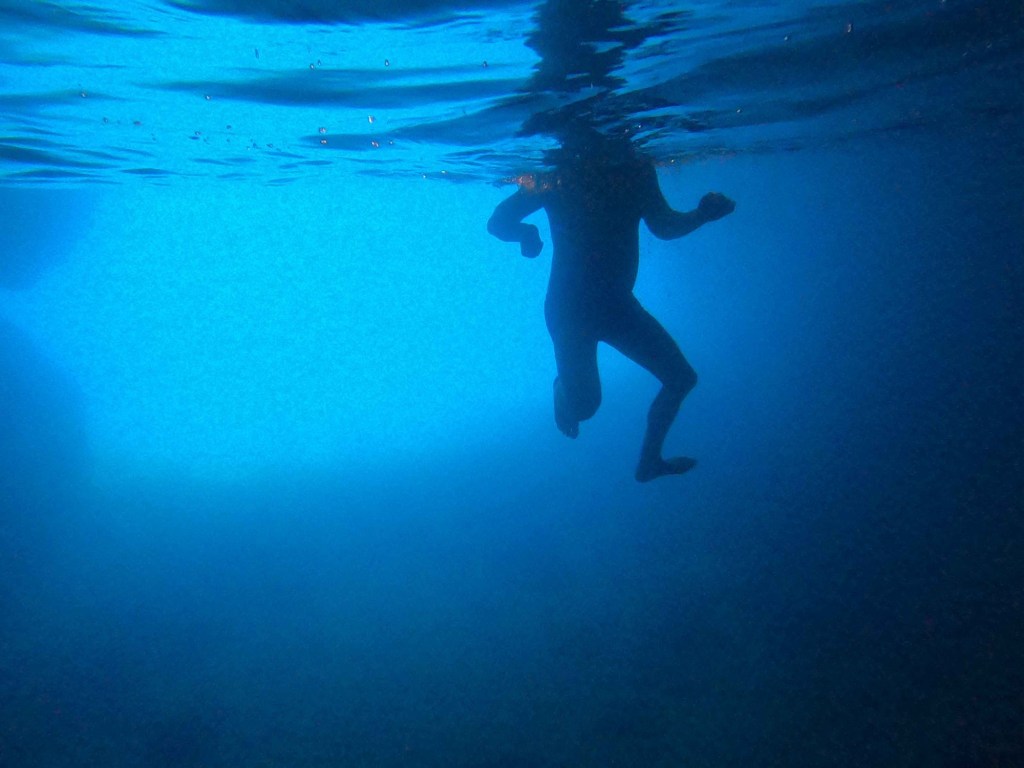
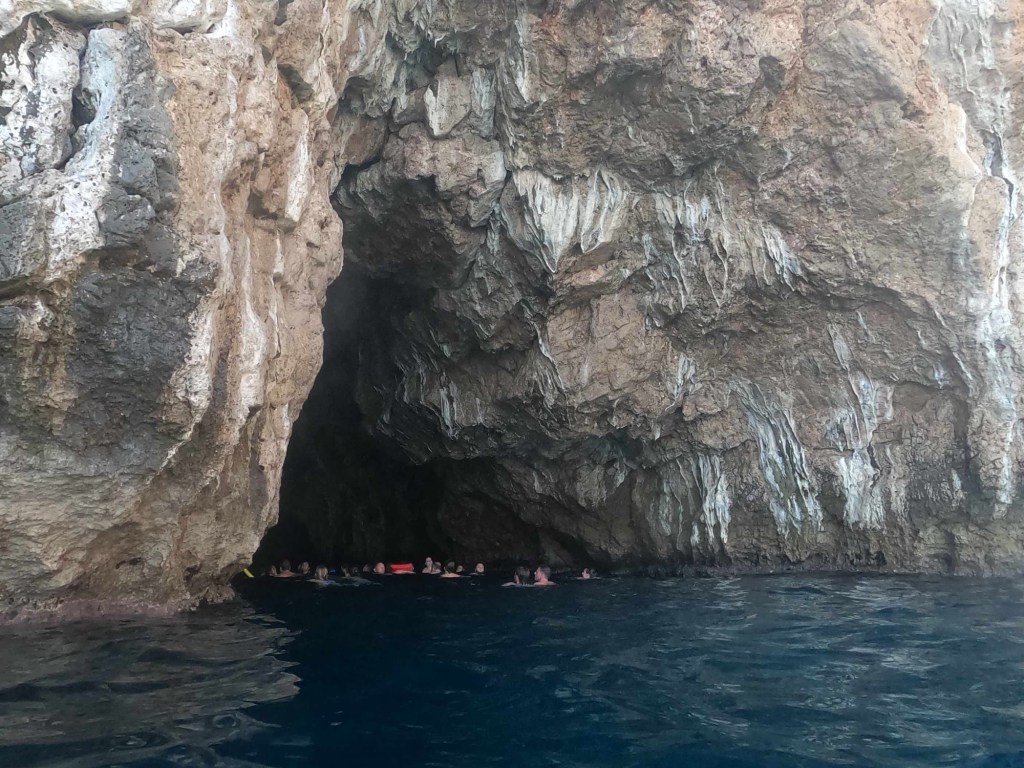
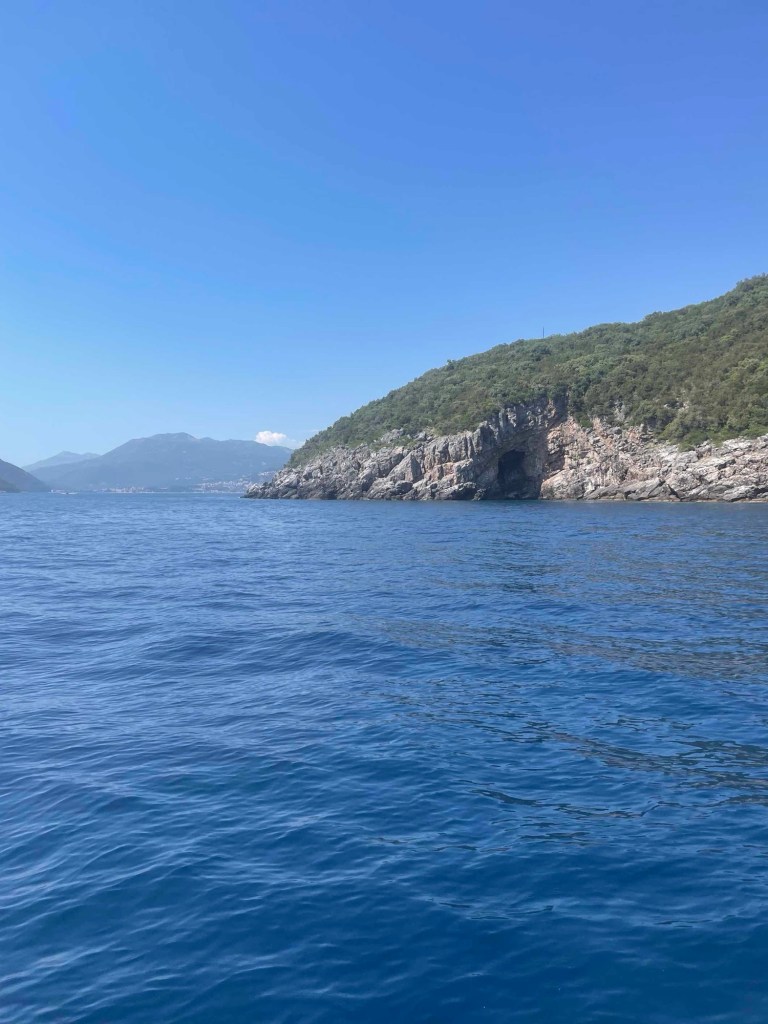
Wir bereiten uns auf unseren Swim an der Grotte vor. Es geht entlang einer Küste mit diversen Felseneinbuchtungen. An der Blauen Grotte war, wie befürchtet Schiffsverkehr: Yachten fuhren ohne mit der Wimper zu zucken durch die Grotte. Wir sehen den blauen Schimmer von draußen. Und gleich daneben ist die ‚Ersatzgrotte‘. Tausende Boote, dazwischen Badegäste. Wir haben 20 Minuten Zeit, die Grotte schwimmend zu erkunden. Ich springe mit Schnorchel und Taucherbrille rein und sehe nur Blau und viele Beine vor mir. Zum Glück geht man hier nicht auf Jagd nach irgendwelchen Tieren wie auf Bali.
Alle wieder heil im Boot, geht es weiter zum U-Boot-Tunnel. Vorher laden wir ein paar Badegäste aus, die den Rest des Tages am Strand verbringen wollen. – Sieht nicht so einladend aus, weil Liege an Liege und laute Musik aus den Lautsprechern halt. Wahrscheinlich bekommt der Bootstourveranstalter Provision, von den Strandrestaurantbesitzern.
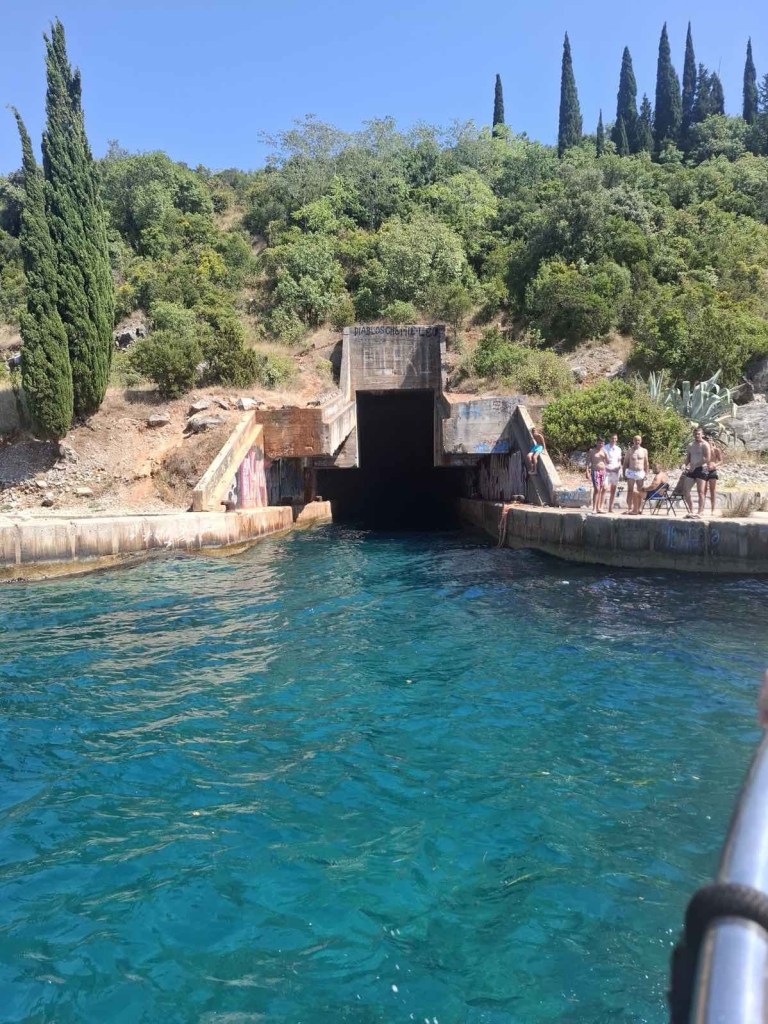
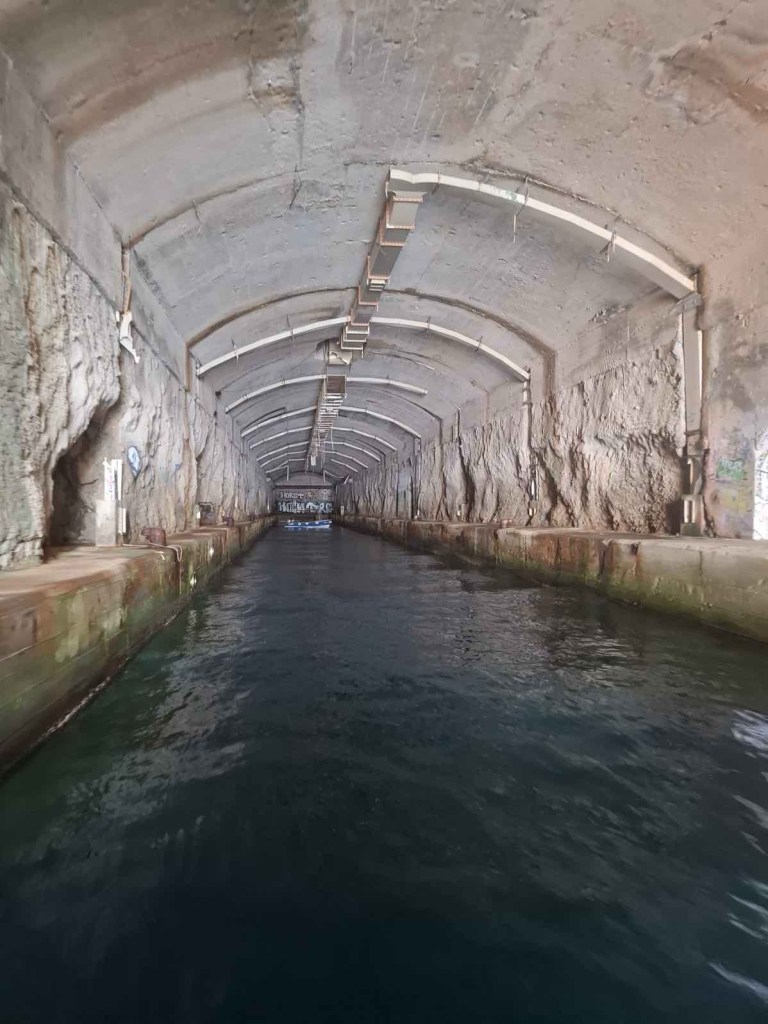
U-Boot-Tunnel. Völlig unscheinbar. Versteckt. Der ist gar nicht so alt und ist ein Relikt aus dem Kalten Krieg. Erst in den 70ern ließ die jugoslawische Regierung mehrere solcher Exemplare direkt in den Felsen sprengen, um U-Boote vor feindlichen Angriffen zu verstecken. Rund 100 Meter kann man in diesen reinfahren. Es gibt seitliche Laufstege und hinter den Türen befinden sich technische Räume, Lager, Belüftungsanlagen. Heute dienen sie nur noch für die Touris. Und manchmal werden sie für Filmaufnahmen genutzt. Fische, Kraken und andere Meeresbewohner finden hier neuen Lebensraum.
Auf der Rückfahrt nach Igalo kreuzten ganz spontan drei Delphine unseren Weg. Was für ein Zufall! Den nehmen wir gern auch noch mit.
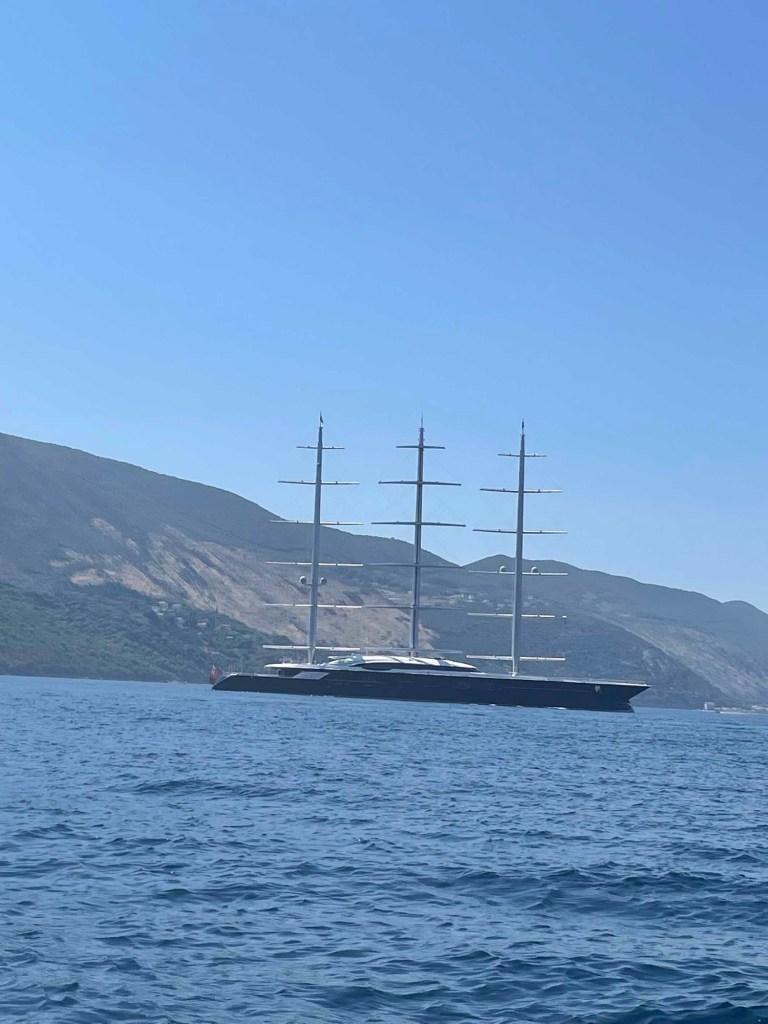
Nach drei Stunden waren wieder zurück in Igalo. Wir verbringen den Rest des Tages am Strand. Aber nicht in Igalo. Das ist uns zu voll, laut, billig und die Betonburgen, grässliche Malle-Stimmung schrecken uns ab. Wir fahren ein paar Kilometer weiter hinein in die Kotor-Bucht nach Kumbor, fuhren ein paar Runden am Strand entlang, bis wir endlich einen passenden Parkplatz gefunden haben. So richtig klar ist hier nicht, wo man parken darf. Viele Hotels stellen ein paar Wasserkanister vor ihrem Haus auf und das wars dann.
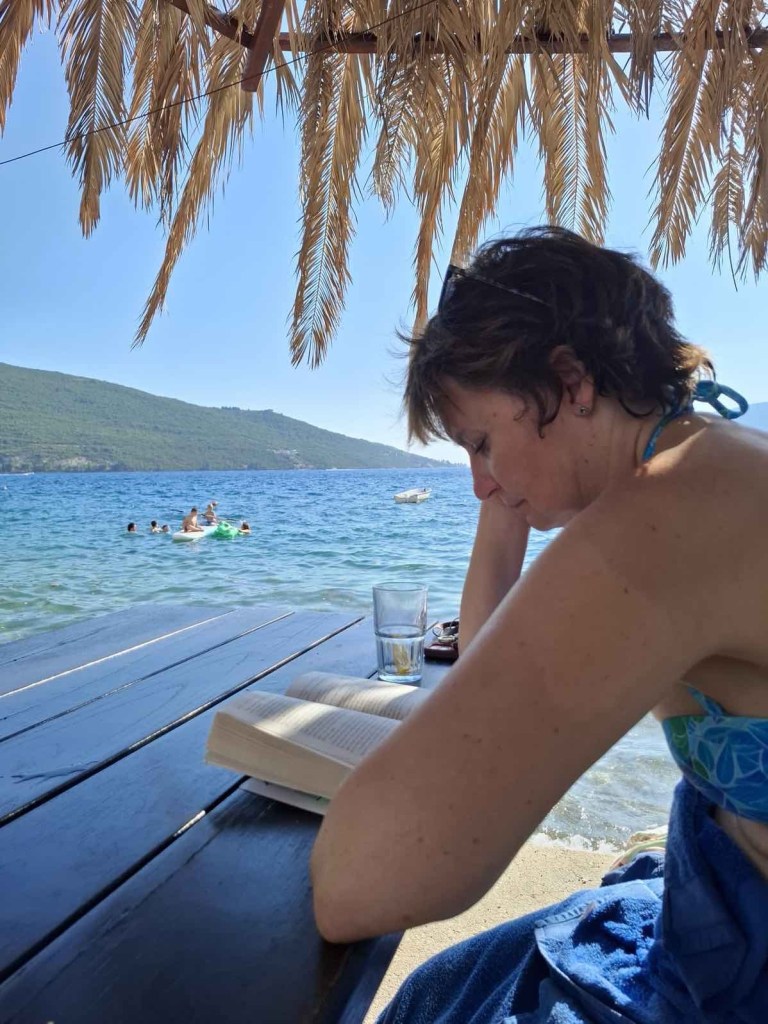
Wir verbringen den Nachmittag im Amaro – Café, direkt am Strand, schlürfen Espresso, Limonade, schlecken Eis und kühlen uns im Meer ab. Es ist doch nicht so sauber. Bei der Yachten-Dichte und Kreuzfahrtschiffen kein Wunder. Wir bleiben bis uns ein fürchterlicher Abwassergestank vertreibt. Was ist das hier? Überall diese Abwassergräben am Straßenrand! Gibt es in Montenegro keine Kanalisation?
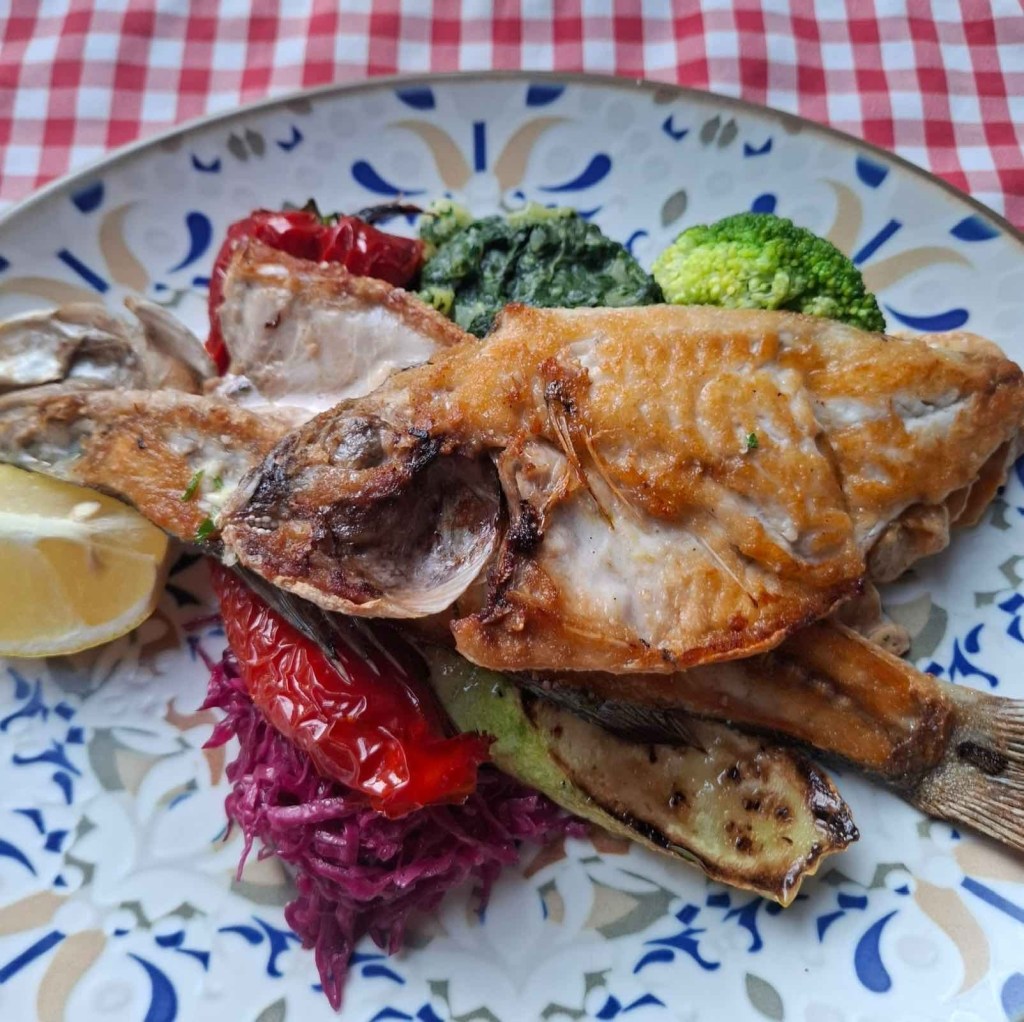
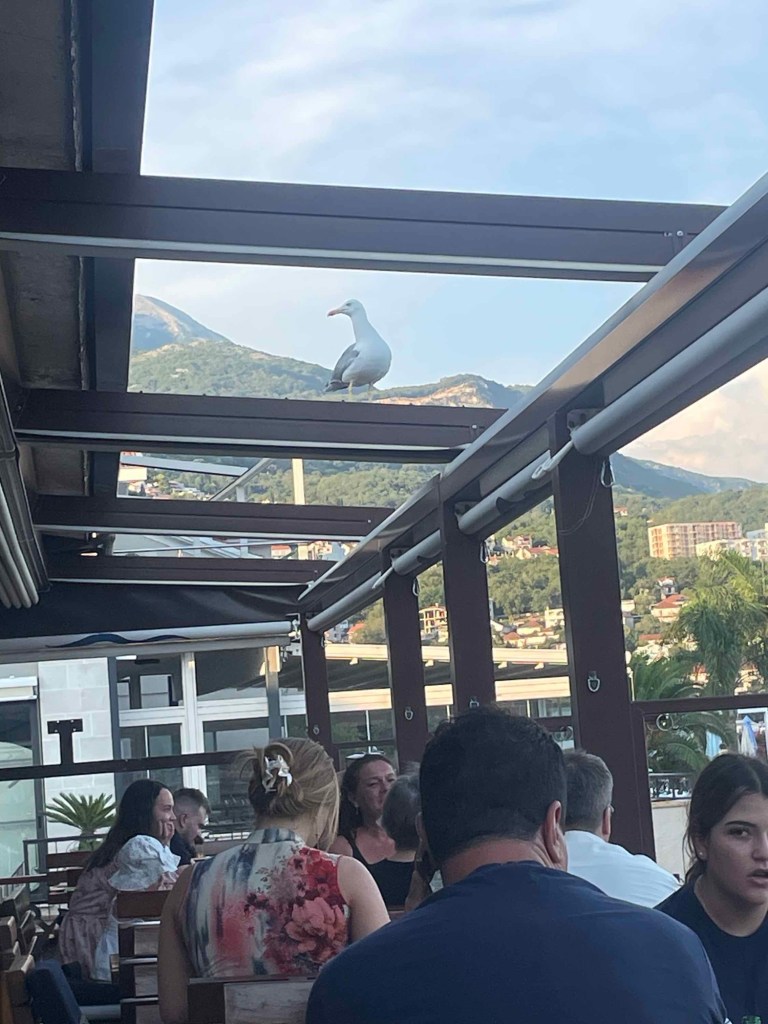
Letzte Station für heute: Konoba Feral – das Fischrestaurant in Herzeg Novi. Für heute reserviert. Platz direkt an der Promenade. Super Service. Kellner spricht sogar ein bisschen Deutsch. Essen und Wein – lecker!!! Endlich ein kulinarischer Erfolg.
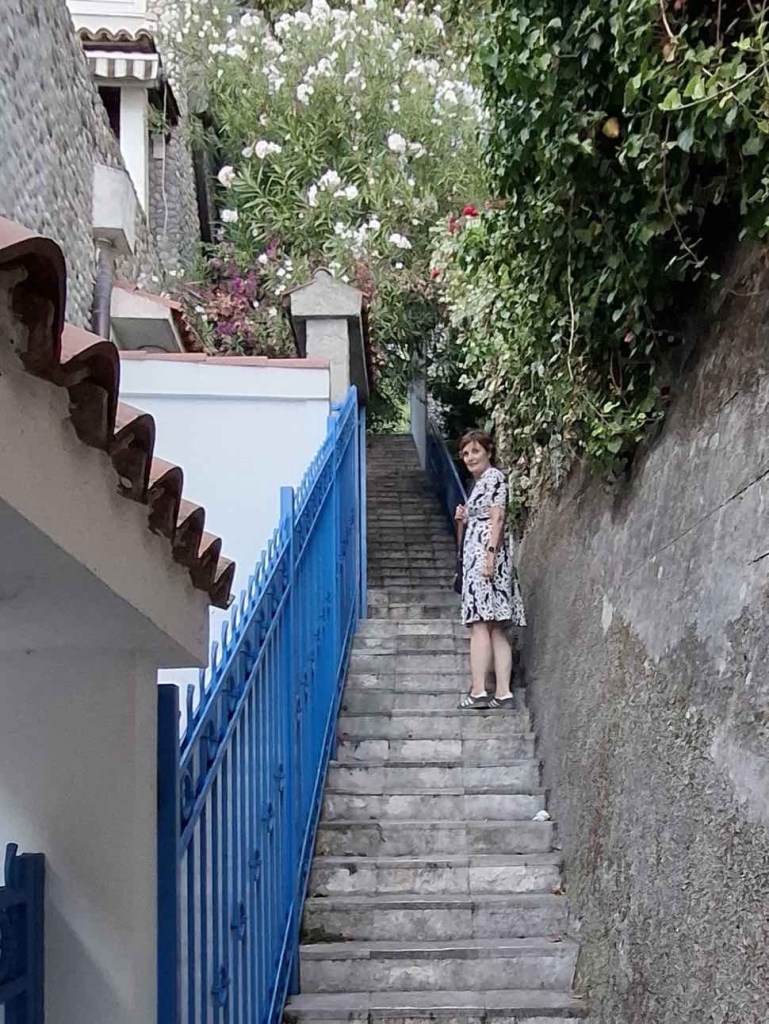
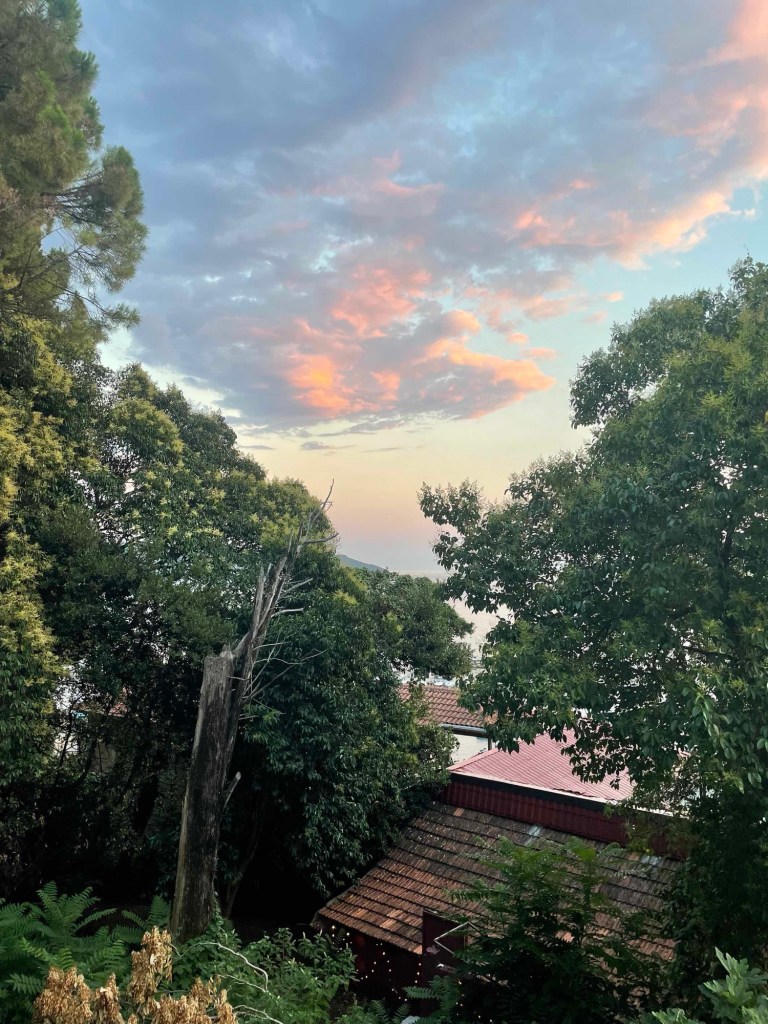
Wir haben zwar gestern schon ein Restaurant in Igalo ausgetestet – das Jedrenak. Essen war ok, Service nun ja – eine Stunde Warten auf das Essen… Allerdings war das Umfeld eher abstoßend. Siehe oben: Igalo.
About Heat, Caves and Dolphins
Heat. Early in the morning already. The best thing is to get up at 5 a.m., before sunrise, and enjoy those peaceful moments. But soon afterwards, the sun beats relentlessly onto the terrace. Breakfast isn’t really possible until around 10 a.m., when at least half of the heavy wrought-iron patio table is finally in the shade.
Thursday’s plan was to explore the bay from the water. We had booked a boat tour departing from Igalo to Marmula Island, the Blue Cave and the submarine tunnel on the Luštica Peninsula. At 12:30 p.m., in the blazing midday heat, we set off.
Shortly beforehand, we learned that the Montenegrinian government had closed the Blue Cave. Boats are no longer allowed to enter, and swimming inside is prohibited as well, after some boat operators ignored the rules and a swimmer was seriously injured not long ago. Fair enough. With five cruise ships arriving every day, bringing countless passengers who choose this excursion during their shore leave, the cave certainly wasn’t benefiting from the crowds. Instead, visitors are now taken to an alternative cave right next door. But let’s start at the beginning.
The pickup from the Bambulo Club Beach Bar was perfectly on time. We were the first to board the boat, which stopped at several other locations, including the main harbour of Herceg Novi, to pick up more passengers. Before long, the boat was almost full. I already had a feeling what it would be like once we reached the cave. Ours certainly wasn’t the only boat heading that way.
Our first stop, however, was a cruise around Marmula Island, whose fortress was built by the Austro-Hungarian Empire in 1853. During World War II, the Italians used the island as an internment and prison camp where thousands of people were held, starved, tortured and died. And yet today it has become a luxury hotel. Access is reserved exclusively for hotel guests willing to spend around €1,000 a night.
We got ready for our swim at the cave. The coastline is dotted with rocky inlets and impressive cliffs. As expected, there was heavy boat traffic around the Blue Cave. Yachts cruised straight through it without a second thought. From outside, we could still see the cave glowing in its famous blue light. Right next to it lies the “replacement cave.” Hundreds of boats, swimmers everywhere. We had twenty minutes to explore it by swimming. I jumped into the water with my snorkel and diving mask and all I could see was endless blue—and lots of legs. At least nobody here is chasing marine life like they do in Bali.
Once everyone was safely back on board, we continued to the submarine tunnel. Before that, we dropped off a few passengers who planned to spend the rest of the day at the beach. It didn’t look particularly inviting: sunbeds packed tightly together and loud music blasting from the speakers. I suppose the tour operator receives a commission from the beach restaurants.
The submarine tunnel is completely inconspicuous and well hidden. It’s actually not that old, but a relic of the Cold War. In the 1970s, the Yugoslav government blasted several of these tunnels directly into the cliffs to hide submarines from potential attacks. Boats can enter for about 100 metres. Inside are narrow walkways, technical rooms, storage areas and ventilation systems hidden behind heavy doors. Today, the tunnels mainly serve tourists, and occasionally they are used as filming locations. Fish, octopuses and many other sea creatures have found a new habitat there.
On our way back to Igalo, three dolphins suddenly crossed our path. What a wonderful surprise! We happily added that to the day’s highlights.
After three hours we were back in Igalo. We spent the rest of the afternoon at the beach—but not in Igalo. It’s simply too crowded, too noisy and too cheap for our taste, and the concrete hotel blocks and Mallorca-style party atmosphere are a real turn-off. Instead, we drove a few kilometres farther into the Bay of Kotor to Kumbor. We circled the waterfront a few times before finally finding a suitable parking space. It’s really not obvious where parking is allowed. Many hotels simply place a few water canisters in front of their buildings, and apparently that’s enough to reserve the space.
We spent the afternoon at Amaro Café right on the waterfront, sipping espresso and lemonade, enjoying ice cream and cooling off in the sea. The water wasn’t quite as clean as we had hoped. With so many yachts and cruise ships, that’s hardly surprising. We stayed until a terrible sewage smell finally drove us away. What is going on here? Open drainage ditches everywhere along the roads! Doesn’t Montenegro have a proper sewage system?
Our final stop of the day was Konoba Feral, a seafood restaurant in Herceg Novi. We had reserved a table right on the promenade. Excellent service. The waiter even spoke a little German. The food and the wine were delicious. At last—a real culinary success.
The day before, we had already tried another restaurant in Igalo, Jedrenjak. The food was okay, but the service… well, we waited an entire hour for our meal. The surroundings, however, were even less appealing. See above: Igalo.


Kommentar verfassen